
Small space, big life: balcony, roof and basement gardens that thrive
Small space, big life: balcony, roof and basement gardens that thrive
Small urban spaces can feel like a puzzle. Every centimetre counts, light shifts through the day, and wind can either refresh or punish. Yet with a clear concept and planting that works hard, a balcony, roof or basement courtyard can become the most loved room of the home.
This guide distils our approach to compact sites across London, from wind-mapped roof terraces to calm, green basements. It covers structure and loading basics for roofs (with a strong recommendation to obtain structural sign-off), planting for wind and shade, irrigation, integrated seating and storage, and discreet lighting that protects views. You will also find two sample palettes, one for a windy terrace and one for deep shade, to help you start with confidence.
Start with a clear plan
Small spaces reward decisiveness. Begin by defining a single governing idea that organises movement, materials and planting. In practice, this means agreeing what the space must do, then editing.
- Establish priorities: a morning coffee perch, discreet storage, a child-friendly corner, or a place to read at night.
- Map light and wind: note sun paths, downdrafts from neighbouring buildings and pockets of shelter.
- Set a restrained palette: one or two hard materials repeated, plus a planting matrix guided by the 70/30 rule, typically 70 percent structural, 30 percent seasonal flourish.
A structured plan is also how you achieve low maintenance. Choose durable materials, focus on evergreen structure, add irrigation, and avoid cluttered pot collections that are hard to water and feed evenly. If you want a formal starting point, explore our approach to garden planning and masterplans, where circulation, focal points and planting structure are resolved before detailing.
Roof terraces and balconies, weight and waterproofing
Roofs are specialist environments. Loading, waterproofing and drainage come first, before aesthetics. As a rule, always obtain structural advice from a qualified engineer and seek formal sign-off before adding planters, paving or furniture. Key considerations:
- Weight: choose lightweight components, such as porcelain on pedestals, aluminium or powder-coated steel planters, and mineral substrates. Wet compost is heavy; plan for saturated weights.
- Waterproofing: never puncture membranes without approved details. Use adjustable pedestals to create a level surface and continuous drainage above the membrane.
- Wind: map gusts and downdrafts to place seating in calm zones and anchor taller planters. Choose corrosion-resistant fixings and specify wind-stable species.
If you are considering a terrace, our page on roof gardens outlines the typical process from early checks to planting specification, and how our Project Coordination streamlines delivery and protects the fabric of the building.
Planting for wind and shade
Wind and shade drive plant choice more than almost anything else in compact London sites.
- Windy terraces: favour flexible stems, evergreen structure and tough foliage that moves without shredding. Grasses and wind-clipped shrubs provide rhythm and resilience.
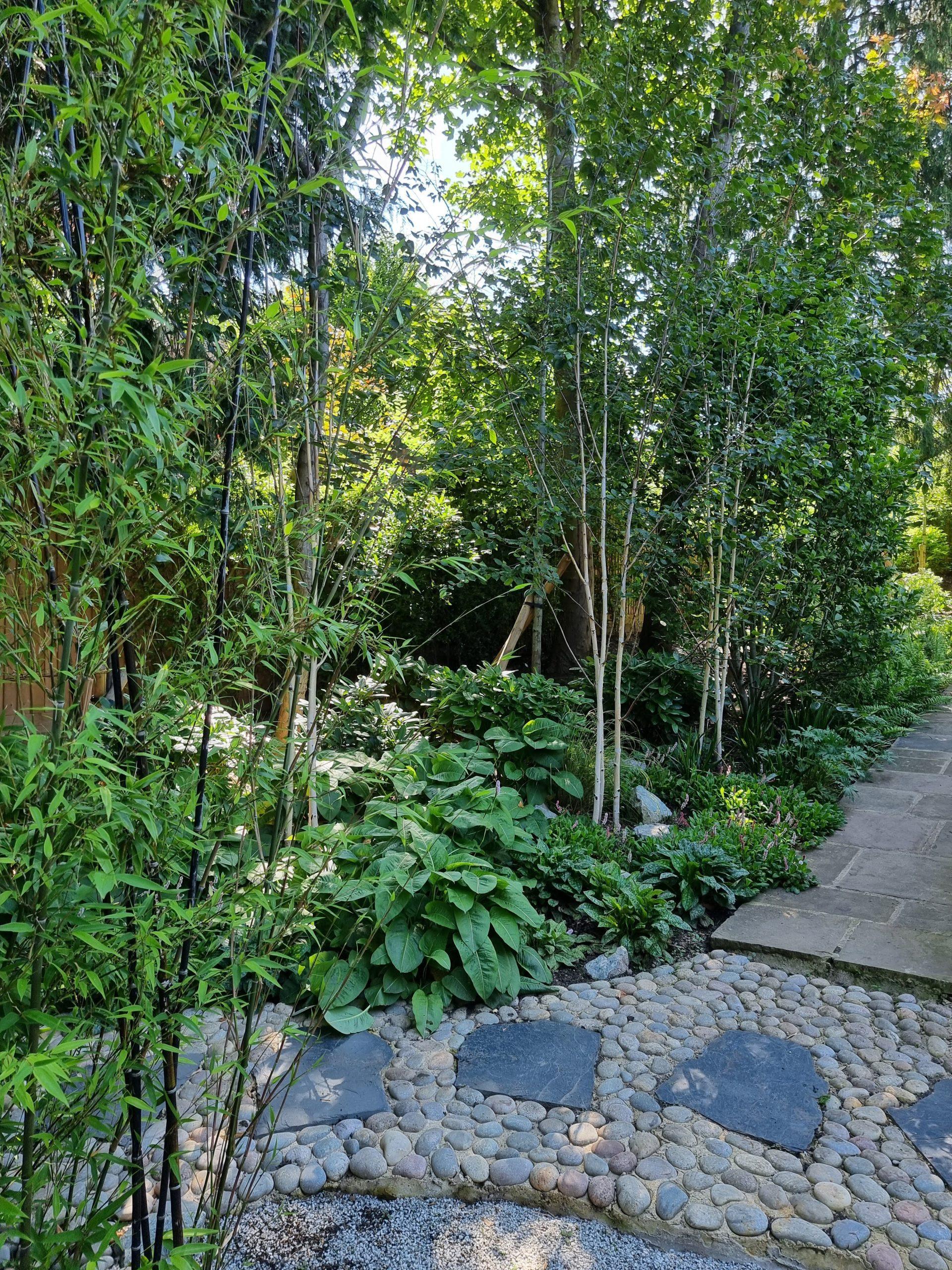
- Shaded basements: think leaf form, texture and evergreen presence. Light is treated as a material, with pale porcelain or Yorkstone, glazed tiles and mirrors lifting the atmosphere.
Across both conditions, irrigation is the quiet workhorse. A simple, timed drip system stabilises moisture, reduces stress and keeps maintenance realistic. In containers, use free-draining substrate with water-retentive additives and mulch to limit evaporation.
Seating, storage and vertical systems
Integrated benches can double as storage for cushions and tools, freeing the floor for circulation. Powder-coated metal planters can be fabricated to bench height, with lift-up lids and concealed fixings. Vertical systems, such as tensioned wire grids or slim trellis, support climbers without thickness. On small balconies, combine a narrow planter with a backrest rail and a fold-down table to keep uses flexible.
For paving, choose a single finish and run it wall to wall to make the space feel larger. Porcelain is excellent for light retention and simple cleaning. If you plan to refresh or redesign a terrace or patio, see our guidance on garden paving and patio design for material selection and edge detailing that keeps lines crisp.
Lighting without glare
In small, elevated spaces, protect skyline views with low-glare fittings. Use warm, focused uplights to graze foliage and verticals, not the horizon. Avoid tall bollards that compete with views. Position one or two low-level markers along steps or thresholds and keep colour temperature consistent for a calm night-time atmosphere
Sample planting palettes
These starters demonstrate structure and movement without fuss. Adjust species to your aspect and consult for exact cultivars and sizes.
Windy terrace, full sun to part sun:
- Structural evergreens: Euonymus japonicus ‘Green Spire’ for slim uprights; Pittosporum tenuifolium ‘Golf Ball’ for clipped mounds.
- Grasses for movement: Calamagrostis x acutiflora ‘Karl Foerster’, Stipa tenuissima for fine texture.
- Resilient perennials: Nepeta ‘Walker’s Low’, Salvia nemorosa ‘Caradonna’, Echinacea purpurea for summer colour and pollinators.
- Climbers on wires: Trachelospermum jasminoides for scent and year-round cover in sheltered positions.
Basement courtyard, shade to deep shade:
- Evergreen backbone: Fatsia japonica, Aucuba japonica ‘Rozannie’, and Osmanthus x burkwoodii for form and fragrance.
- Ferns and texture: Dryopteris affinis, Polystichum setiferum, Asplenium scolopendrium to soften corners.
- Ground layer: Heuchera ‘Obsidian’ or ‘Lime Rickey’ for leaf contrast; Pachysandra terminalis for carpeting.
- Climber for dim light: Hydrangea anomala subsp. petiolaris on a wall or mesh.
Keep containers generous. Depth supports roots and moisture retention, which reduces maintenance. Repeat a small group of species to build rhythm consistent with the 70/30 rule, then layer accents seasonally.
Budget-friendly moves that look refined
Budgets go further in small spaces when the concept is tight. A few well-chosen actions add polish without excess cost:
- Rationalise pots into coordinated, powder-coated planters sized to the space.
- Repeat one paving finish and a single edging detail for coherence.
- Use mirrors sparingly where they reflect planting, not your neighbour’s windows.
- Add a timed drip irrigation kit to protect your investment.
- Introduce one focal piece, such as a shallow bowl water feature at eye level, rather than multiple small ornaments.
If you are exploring options for a compact site, our overview of small garden designs shows how integrated seating, slim planters and planted screens create calm, usable rooms that feel larger than their footprint.
Low maintenance by design
Low maintenance is not plant-free. It is about structure, irrigation and sensible species. Choose evergreen frameworks, long-lived perennials and drought-tolerant grasses. Mulch annually. Keep access simple so pruning and cleaning are easy. Where possible, specify corrosion-resistant materials and finishes that wipe clean. A well-composed, planting-led plan typically requires less intervention than a scatter of pots and ad hoc purchases
FAQs
Begin with a governing idea, then map movement, light and shelter. Fix structure first, including surfaces, edges, storage and verticals, and finalise a restrained planting matrix. If you would like a formal route, our garden planning process delivers a coherent masterplan before details are specified.
How to design a low maintenance garden?
Prioritise evergreen structure, drought-tolerant perennials and grasses, install a simple drip irrigation system, and mulch annually. Reduce the plant list, repeat elements for rhythm, and choose durable, easy-clean materials.
How to make a roof garden?
Start with structural checks and waterproofing details from an engineer and contractor. Use lightweight layers, pedestal-supported porcelain or decking, corrosion-resistant planters, and wind-stable planting. Integrate irrigation and lighting while access to services is open. Our roof gardens page outlines the stages before planting is ordered.
Do rooftop gardens attract pests?
Any planting can attract pests, but diversity and healthy conditions reduce problems. Good airflow, appropriate watering, clean substrates and regular checks typically keep issues minor. Avoid over-fertilising and remove plant litter to limit habitat for pests.
How to decorate a small garden on a budget?
Edit rather than add. Unify pots, repeat materials, use mirrors and pale finishes to amplify light, and introduce one strong focal piece. A timed irrigation kit and a small number of well-sized planters will outperform many small pots and cost less to maintain.
Coordinating design and delivery
Elegant results rely on timing and collaboration. Roberto Silva’s Garden Design, Planting Design and Project Coordination bring concept, materials and supply into one process. Designs are developed with buildability, drainage and levels resolved; lead times are aligned so summer construction can proceed smoothly, with autumn planting follow-up for best establishment. If your project needs broader context, see how our landscape design service integrates circulation, paving, planting and lighting into a cohesive whole.
Summary and next steps
A thriving compact garden comes from clarity: a single idea, a restrained material palette and planting chosen for wind or shade, supported by irrigation and low-glare lighting. On roofs, secure structural sign-off first; in basements, treat light as a material. If you would like expert help to plan now for a summer install and an autumn planting follow-up, arrange an on-site consultation to discuss your brief and options. Explore small garden designs for more examples, or get in touch to begin a tailored plan that makes your small space live large.