
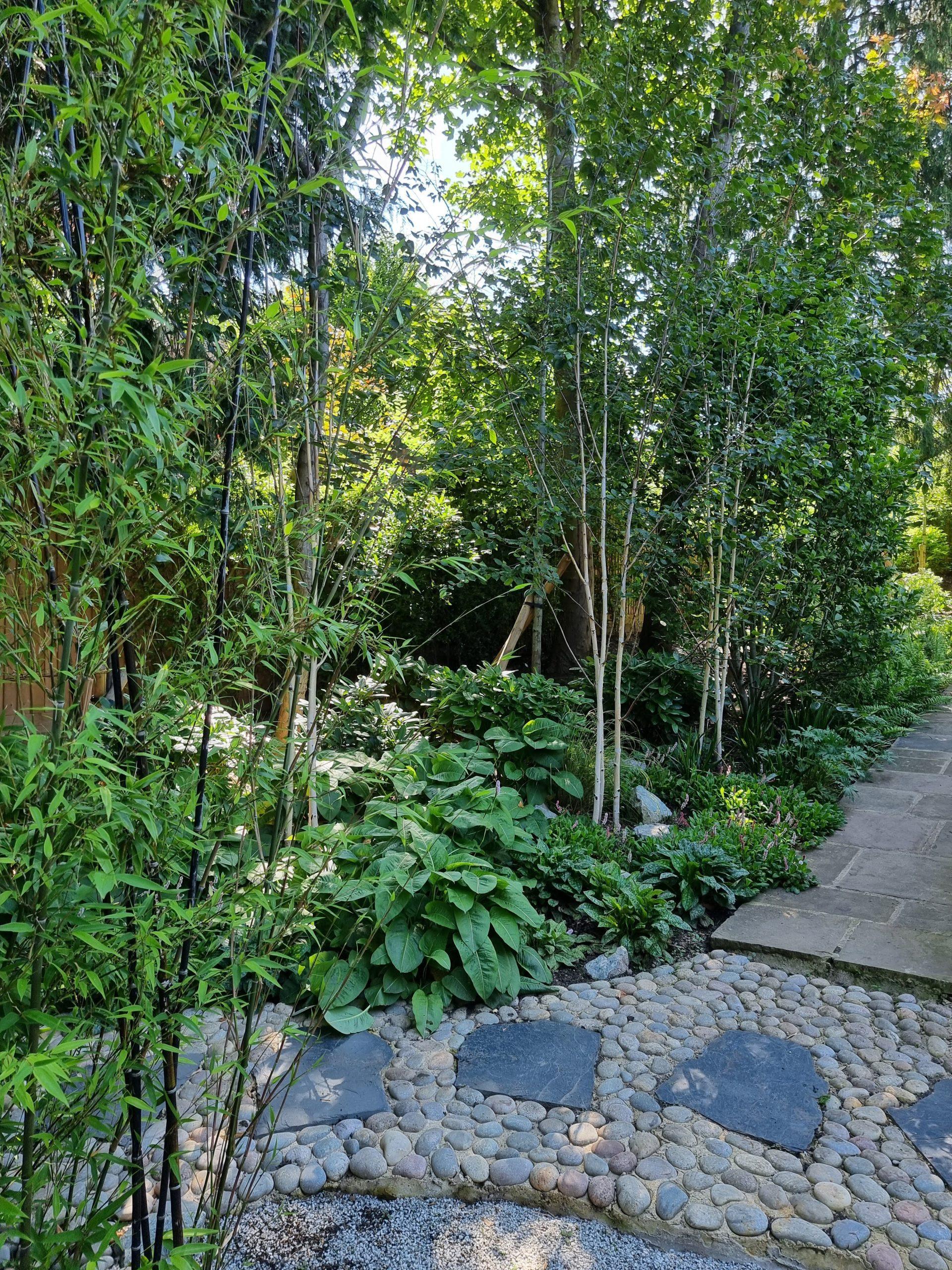
Garden fencing
Garden fencing
Looking to rethink your garden fencing as part of a more elegant, usable outdoor space? Roberto Silva is a North London-based landscape and garden designer who treats boundaries, screens and fencing as integral design elements rather than afterthoughts. He develops complete garden concepts that integrate fences, slatted timber screens, powder-coated metal panels and planting to create privacy, structure and atmosphere. To explore how your garden boundaries could work harder, book an on-site consultation by calling 020 7688 0935, WhatsApp +44 7957 361718 or emailing landrob7@aol.com.
A DESIGN LED APPROACH TO GARDEN FENCING
For Roberto, vertical structures – fences, screens, pergolas and planted boundaries – are the “bones” that frame the space. Instead of treating garden fencing as a purely functional divider, it is composed as part of the overall garden design so that lines, proportions and materials all work together.
Boundaries are considered from the outset of each project:
- As compositional lines that guide movement and frame views.
- As privacy tools that filter rather than simply block neighbouring outlooks.
- As textural backdrops to lush, layered planting.
- As contributors to evening atmosphere when combined with warm, discreet uplighting.
Roberto’s planting-led philosophy means that structural elements such as slatted timber, powder-coated metal panels and trellis for climbers are always balanced with evergreen structure and seasonal interest in front of the fencing.
WHAT TO EXPECT FROM YOUR GARDEN FENCING
Every commission begins with an on-site consultation. Roberto visits your garden to understand your brief, the existing fencing, levels, light, and how you want to move and feel within the space.
During this visit he will typically:
- Discuss what you like and dislike about your current boundaries.
- Explore privacy issues, neighbouring windows and borrowed views.
- Consider how new fencing and screens can support circulation, seating and storage.
- Review materials and finishes that complement your interior and architecture.
- Identify opportunities for climbers, pleached trees or tall structural planting.
Following the consultation, your tailored garden planning and design work may include:
- Spatial layouts showing how fences, screens and planting interrelate.
- Material suggestions – from hardwood cladding to powder-coated metal panels.
- Proposals for integrated storage, bin and bike screening.
- Recommendations for uplighting and reflective surfaces to lift darker boundaries.
- Detailed planting ideas to soften and articulate each section of fencing.
Roberto then works closely with contractors, architects and suppliers to ensure that fencing, vertical screens and associated details are buildable, well-proportioned and delivered at the right stage of the project.
garden fencing as part of complete design
Because fencing has such a strong visual impact, Roberto rarely considers it in isolation. It sits within a coherent strategy that also includes circulation, terraces, planting and lighting. In many projects, new boundaries are coordinated with landscape design, paving and seating so that the garden reads as one calm, continuous space.
Depending on your brief and site, this might involve:
- Slatted timber fencing that echoes interior joinery or garden benches.
- Powder-coated metal panels aligned with bespoke planters for a crisp, contemporary feel.
- Hardwood-clad boundary walls acting as warm backdrops to bold foliage.
- Tensioned wires or trellis set against fences to support climbers.
- Integrated privacy for terraces, roof spaces and basement courts.
The result is a considered composition where boundaries recede visually, allowing lush planting and carefully placed focal points to take centre stage.
Planting-led screening and fencing
Roberto’s practice is rooted in planting design. He typically works with a 70/30 balance: around 70% structural, repeated elements and 30% seasonal flourish. This principle extends naturally to garden fencing and screening.
Behind, in front of and above fences, he may specify tailored planting schemes using:
- Evergreen hedging and pleached trees to lift the fence line and add depth.
- Grasses and structural perennials to soften long runs of panels.
- Climbers on tensioned wires to green vertical surfaces without consuming floor space.
- Shade-tolerant species for narrow side returns or basement courtyards.
By pairing solid surfaces with layered, textural planting, boundaries become quietly elegant backdrops rather than dominant lines.
Garden fencing in London
Roberto Silva works from his North London base at:
41 Imperial Avenue
Victorian Road
London N16 8HP
From here he delivers residential projects across London and beyond, from compact courtyards and basement gardens to larger suburban plots and roof terraces. In many London gardens, neighbouring windows, tight boundaries and overlooked terraces make fencing, screening and privacy a central part of the brief.
Whether you are rethinking a small side passage, a family terrace or a full front garden design, Roberto ensures that fences, gates and screens are correctly scaled to the architecture, respectful of neighbours and integrated with materials such as porcelain paving, self-binding gravel and hardwood decking.
Fencing for terraces, courtyards and roof spaces
Vertical structure becomes even more critical in spaces such as basements, small courtyards and roof gardens. Roberto designs tailored fencing and screening strategies that respond to the practical demands of each setting.
For example:
- In shady basement gardens, pale cladding, mirrors and glazed tiles can be combined with delicate screening to lift light levels.
- On roof terraces, wind exposure, loading and corrosion resistance are all considered when specifying screens, balustrades and planters as part of a wider roof gardens concept.
- In tight urban courtyards, slim verticals and carefully proportioned slats maintain privacy without overwhelming the space.
These solutions are tied back to the overall composition of paving, seating and planting, ensuring that no element feels added on.
How garden fencing fits into your project journey
Your journey typically follows a clear sequence:
- Initial contact
You get in touch by phone (020 7688 0935), WhatsApp (+44 7957 361718) or email (landrob7@aol.com) to outline your needs, including any specific fencing or privacy concerns.
- On-site consultation
Roberto visits your garden, listens carefully to your brief and studies boundaries, levels, drainage and views. Early ideas for fencing, materials and planting are discussed.
- Concept and masterplan development
He prepares concept sketches and a coherent plan drawing together fencing, circulation, terraces, garden paving, lighting and planting.
- Detailed design and specification
Materials, finishes, heights and alignments for fences and screens are refined alongside the wider scheme so that everything works as a whole.
- Coordination and delivery support
Roberto liaises with contractors and suppliers so that fencing, planting and hard landscaping are delivered in the correct sequence, with practical access and maintenance considered.
Throughout, the objective is to bring your brief to full satisfaction, creating a garden that feels private, generous and coherent.
FAQs about garden fencing and design
Do you provide standalone garden fencing installation in London?
Roberto’s focus is design-led, planting-led gardens. Fencing, screens and boundaries are developed as part of a complete garden or landscape design, with specifications and layouts prepared and then implemented by contractors he coordinates with.
Can you work with my existing fences instead of replacing them?
Yes. In many London gardens, existing boundaries are structurally sound but visually dominant. Roberto can design cladding, slatted overlays, climbers and planting to transform tired fencing into a quieter, more elegant backdrop.
How does garden fencing design relate to the rest of my garden?
Boundaries are considered from the start of the garden and landscape design process. Fence lines guide circulation, frame focal points and support planting, so they are resolved alongside paving, seating, storage and lighting rather than in isolation.
Can you help with privacy issues in an overlooked London garden?
Yes. Many clients come with concerns about neighbouring windows or roof terraces. Roberto combines carefully proportioned fencing or screens with pleached trees, climbers and strategic planting to filter views while preserving light and a green, open feel.
Is garden fencing design suitable for small gardens and courtyards?
Absolutely. In compact spaces, every vertical plane counts. Roberto has extensive experience with small garden designs, courtyards and balconies, where slim fencing, tensioned wires and integrated planters make the most of limited square metres.
Can fencing be integrated with storage and functional elements?
Yes. Bin stores, bike sheds and outdoor kitchens can be absorbed into boundary treatments so that practical elements disappear into a refined backdrop of cladding, slats and planting.
How do I start planning new garden fencing for next spring?
Winter is an ideal time to plan. Roberto recommends using the colder months to refine the overall design, including fencing, planting and hard landscaping, so contractors can build efficiently in spring once materials and plants are available.
Plan your next step
If you are ready to rethink how your boundaries, privacy and planting work together, arrange an on-site consultation to discuss garden fencing and a complete design for your outdoor space. Contact Roberto on 020 7688 0935, WhatsApp +44 7957 361718 or email landrob7@aol.com to begin the conversation.