
Front garden, big impact: Cost-savvy ideas that add kerb appeal and value
Front garden, big impact: Cost-savvy ideas that add kerb appeal and value
A London front garden works hard. It frames your home, guides guests safely to the door, and sets the tone for what lies beyond. With a few well-judged moves, it can also soak up rainwater, hide bins and bikes, and make the street feel kinder. None of this has to be expensive. Good design, smart materials and a clear brief go further than you might think. This guide distils practical, budget-aware strategies that suit London streetscapes and period facades, with indicative costs to help you prioritise. It outlines quick wins you can do this month, and investment pieces that elevate daily use and long-term value. Spring is an ideal moment to implement upgrades, when ground conditions ease and nurseries are stocked
START WITH A SIMPLE PLAN
.A small plan clarifies priorities. Map where you walk, where you park bikes, how bins move, and where light and downpipes sit. Resolve the floor plane and edges first, then add planting and lighting. In compact spaces, restraint reads as confidence, so repeat a short list of materials and keep the geometry clear.
Permeable gravel that looks refined
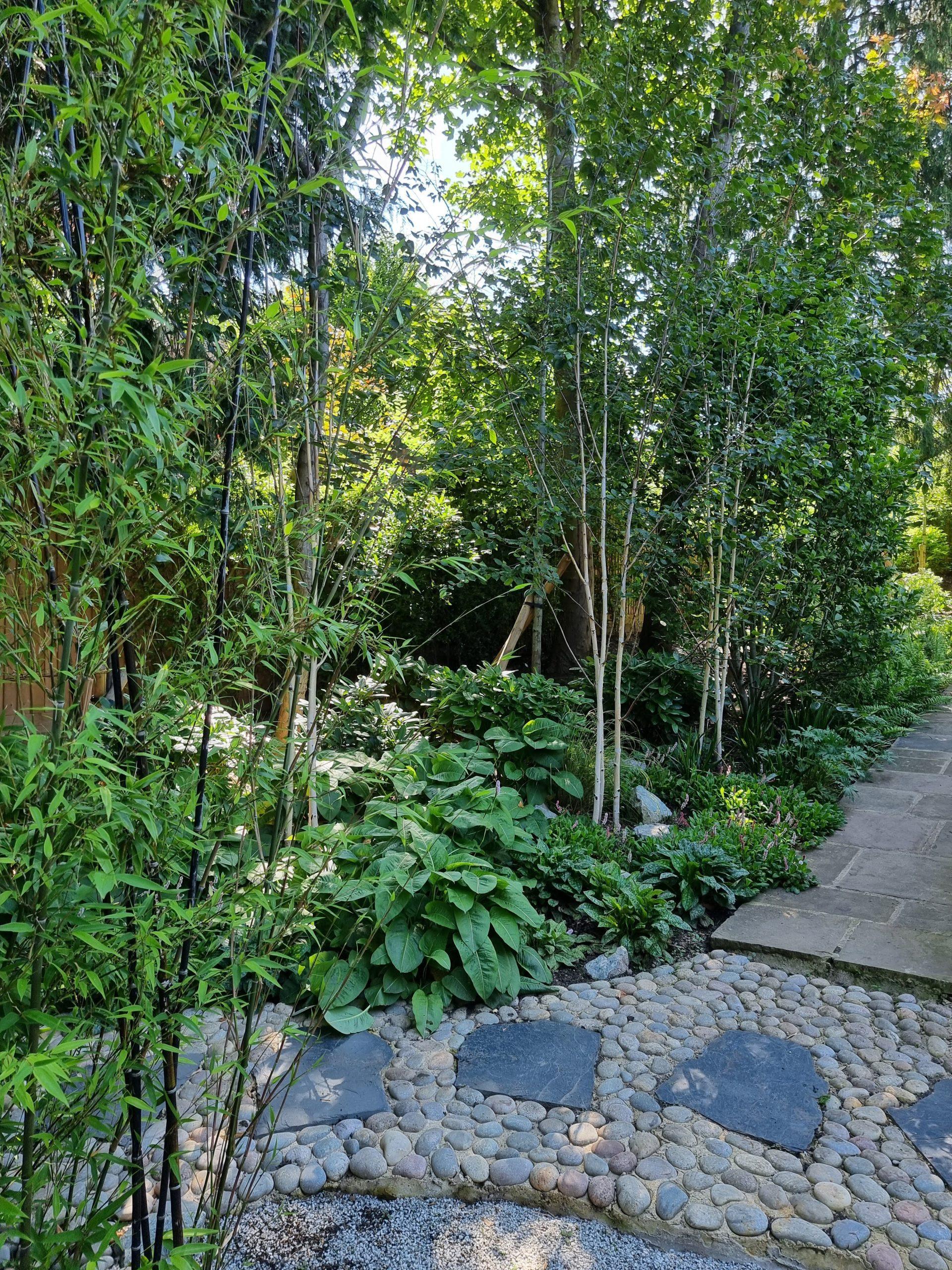
For London front gardens, self-binding gravel or washed pea gravel delivers permeability, texture and a generous feel at modest cost. Pair it with slim metal or Corten steel edging for crisp lines and to keep gravel out of planting.
- Materials guide: self-binding gravel typically £12 to £25 per m²; washed pea gravel £40 to £70 per m³; Corten or powder-coated steel edging £10 to £30 per linear metre. Sub-base and geotextile are additional. Final installed costs vary with access and ground conditions.
- Detailing tip: create a raked path band to the door using a finer grade gravel or a contrasting stone to read as a quiet runway.
- Maintenance: top up every few years; a discreet threshold drain keeps interiors clean.
If your entrance needs a firm landing, combine gravel with a small pad in porcelain or Yorkstone. For ideas on material palettes, see our guide to garden paving and patio design.
Elegant paving bands that lift the façade
A narrow band of paving to the door feels gracious and guards against muddy shoes. Pale porcelain lifts light in shaded streets; Yorkstone suits period properties with a timeless note. You can introduce a single soldier course of bricks or a slim terrace pad for a modest upgrade that looks deliberate.
- Materials guide: exterior porcelain tiles £25 to £60 per m²; Yorkstone flags vary widely, often £90 to £150 per m²; clay pavers £30 to £60 per m². Allow for a compacted sub-base and pointing.
- Cost-savvy move: use premium stone only at the threshold and keep gravel for the rest. The contrast reads as elegant without tipping the budget.
Clipped structure for year-round order
Structure before soft planting is key. A pair of evergreen blocks or domes near the door anchors the space and looks composed in winter. Use the 70/30 rule: about 70 percent evergreen structure, 30 percent seasonal accents. In tough streetside conditions, consider:
- Pittosporum tenuifolium and cultivars for compact, glossy structure
- Osmanthus x burkwoodii for scented spring blossom and neat clipping
- Sarcococca confusa for shade and winter perfume
- Hebe and Euonymus for resilient outlines
Underplant with bulbs and low perennials like Libertia, Helleborus or hardy Geranium to soften edges. Mulch well to suppress weeds and conserve moisture.
For tailored, low-maintenance planting that thrives by pavements, learn more about our planting schemes.
LIGHTING FOR SAFETY AND WELCOME
Front gardens benefit from quiet lighting that prioritises safe navigation and a warm arrival. Low-level bollards or recessed step lights reduce glare; a single uplight on clipped structure adds theatre without showiness.
- Indicative costs: exterior-rated path lights start around £60 to £150 per fitting; simple spike uplights £40 to £120; a basic transformer and cabling allowance from £150. Installation varies with distance to power and controls.
- Warm colour temperature (around 2700 K) flatters brick and planting. Use subtle beams, then test at dusk before fixing positions.
BIKE AND BIN SCREENING THAT SUITS THE STREET
Treat storage as part of the composition. Slatted timber with a slight gap reads lighter and blends with planting. Powder-coated metal creates a slim contemporary line in small spaces. Add climbers on tensioned wires, such as Trachelospermum for evergreen scent or Clematis armandii where there is light.
- Materials guide: off-the-shelf bin stores from £250 to £700; bespoke slatted screens typically £200 to £400 per linear metre for materials; powder-coated planters suitable for screening from £150 upwards.
- Practical note: ensure lids open fully, check turning circles, and keep a 1 m clear path to the pavement.
If boundaries need attention, a refreshed fence can transform kerb appeal. See our overview of garden fencing for approaches that integrate with planting and privacy.
PLANTING THAT THRIVES BY PAVEMENTS
Street-side planting faces reflected heat, wind and inconsistent soil. Choose tough, textural plants that earn their keep:
- Evergreen backbone: Pittosporum, Hebe, Sarcococca, Osmanthus, Buxus substitutes like Ilex crenata
- Movement and texture: Stipa tenuissima, Calamagrostis, Carex testacea
- Scented and seasonal notes: Nepeta, Salvias, Erigeron karvinskianus in cracks, Hellebores for winter lift
- Climbers: Trachelospermum jasminoides for evergreen cover; roses or honeysuckle on a restrained trellis
Improve soil first: relieve compaction, add organic matter, and mulch 5 cm deep. Install a simple soaker hose where possible so watering is effortless in summer.
QUICK WINS VS INVESTMENTS PIECES
Quick wins you can do now:
- Weed, edge, and mulch, then wash the front steps and paint the gate and railings
- Add two clipped evergreens in pots to frame the door and a tray of bulbs for instant lift
- Swap a harsh floodlight for two warm, low-glare path markers
Consider as investment pieces:
- A permeable gravel surface with a porcelain or Yorkstone landing
- Bespoke slatted screening that hides bins and bikes while feeling intentional
- An integrated planting and lighting refresh following a concise front garden design
WHAT WILL IT COST< BROADLY SPEAKING?
Every site is different, but these ranges help prioritise:
- Permeable gravel with edging and a compacted sub-base, materials typically £25 to £60 per m² plus sub-base; installed costs vary with access
- Porcelain threshold or small pad, materials £25 to £60 per m²; Yorkstone £90 to £150 per m²
- Slatted screening, materials £200 to £400 per linear metre depending on timber species and finish
- Planting refresh, mixed 2 to 5 litre plants often £8 to £25 each; structural evergreens and pleached trees cost more and may require staking and irrigation
- Lighting, from £60 per fitting upwards plus cabling and transformer
These figures are indicative, not quotes. An on-site consultation will clarify scope, site constraints and a realistic budget.
TIMING AND PERMISSIONS
Front gardens must manage water well. Keep surfaces permeable or include sufficient drainage to comply with local guidance. Listed buildings and conservation areas may require permissions for boundaries and hardscape changes, so check early. Spring is the ideal window for implementing upgrades and new planting, with design and procurement best done in late winter to secure contractors and nursery stock.
FAQs
What is the cheapest way to do a front garden?
- Keep it permeable and simple. Use self-binding or pea gravel over a compacted sub-base, define edges with slim metal, and rely on a few resilient evergreens plus seasonal bulbs. Paint, cleaning and good edging can deliver a striking lift for very little.
Does a front garden add value?
- Well-presented fronts typically improve perceived value and saleability. Clear structure, safe lighting, tidy storage and healthy planting raise kerb appeal and suggest a well-cared-for home. While exact returns vary, buyers respond to coherent, low-maintenance design.
How can I design my front garden?
- Start with a plan. Fix circulation, drainage and storage first, choose two or three materials you can repeat, then add a backbone of evergreen structure with seasonal layers. A short design exercise or a focused front garden design service can rapidly resolve layout, materials and planting.
How can I make my garden look good with no money in the UK?
- Remove weeds, sweep and wash hard surfaces, edge beds sharply, redistribute existing plants into clearer groups, and top with homemade leaf mould or compost. A pair of pruned evergreens and a handful of bulbs can be enough to refresh the view.
What is the best time to plant a front garden?
- Spring is ideal in London, when soils warm and rainfall supports establishment. Order plants in late winter, then plant March to May as conditions allow. Autumn also works well, especially for evergreens and trees, with less demand on watering.
A CONSIDERED NEXT STEP
If you would like a clear plan for a cost-savvy transformation this spring, Roberto Silva offers garden renovation and hardscape design that bring structure, texture and calm to London front gardens. Explore our approach to small garden designs, then get in touch to arrange an on-site consultation to refine your brief, confirm timings and move smoothly into a spring build.