
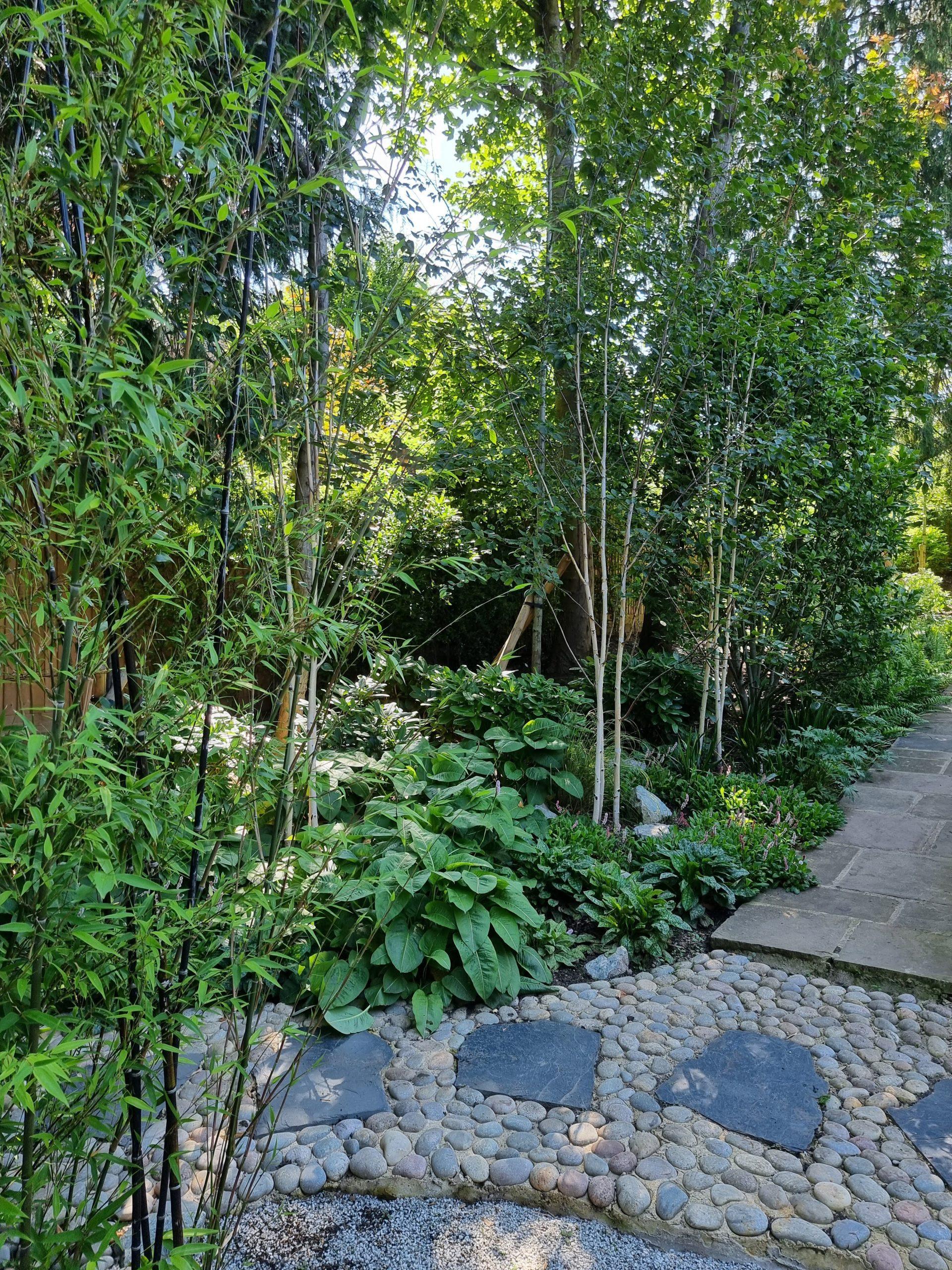
Courtyard Charm: How To Plan And Pretty-Up A Small Space The Designer Way
A small London courtyard can feel like a puzzle. Limited space, awkward levels, curious views from neighbours, and a patchwork of materials can all compete for attention. The designer’s way to resolve it is concept first,then a clear sequence of decisions that unlock proportion, privacy and light. When you treat planting as the bones of the garden rather than an afterthought, even the most compact space becomes calm, generous anddeeply personal.
Start with a clear concept and circulation
Begin by deciding how you want to move and live in the space. Circulation is the backbone. Sketch how you step out from the door, where you sit, how you reach a barbecue, a bin store, or the gate. Aim for one simpleprimary route with short, purposeful branches. This removes clutter and frees space for greenery.
Once movement is set, choose one governing idea for the whole courtyard, such as symmetry and serenity, or a loose, natural flow with curving beds. Your concept guides every choice that follows, from paving layout tothe scale of furniture. If you prefer help at this stage, an Initial Consultation is designed to test options on site and quickly reveal what will serve you best in daily life.
Structure before soft: set out the bones
In small spaces, structure is everything. Think in layers.
Floor plane: Decide the main surface. Porcelain is reliable for city courtyards, with crisp edges, excellent durability and easy cleaning after London rain. Where you want a softer feel and good permeability, self-binding gravel forms a gentle, natural surface that compacts well underfoot and suits informal zones. You can combine the two, using porcelain for the dining terrace and gravel for a secondary path or under abench.
Edges and containment: Corten steel edging draws neat, sinuous lines and weathers to a deep orange-brown. It ties porcelain or timber to planting, and creates tactile contrast without fuss.
Vertical planes: Boundaries define mood. A simple slatted timber screen or well-detailed garden fencing can change the entire character. Dark stain recedes visually and pushes planting forward. Integrate simplelighting at low level to model texture in the evening.
With these elements resolved, beds and planters can be arranged with confidence. In our work, texture-driven planting creates structure as strong as the hard landscape. Grasses, architectural evergreens and seasonal layers act as the composition rather than decoration.
Proportion, privacy and light
Proportion: In a small courtyard, a single, generous seating zone often feels larger than two undersized pads. Choose one well-proportioned rectangle of porcelain for a table and chairs, and allow planting tosoften the edges. Use repeated widths in steps, bench lengths and path modules to bring quiet order.
Privacy: Pleached trees, slender multi-stem shrubs and climbers on simple wires provide height without bulk. Aim to filter views rather than build a fortress. A cedar screen with evergreen climbers, for instance, canmake a tiny plot feel secluded and green all year.
Light: Paint walls and fences thoughtfully. Very bright white can glare, especially in full sun. A soft grey or deep charcoal often works better, setting off foliage and making boundaries recede. Add subtle up lights at base of specimen plants so the courtyard reads well in winter afternoons and evening dinners.
Planting as the organising principle
To make a courtyard garden pretty, find beauty in texture and contrast. Combine glossy leaves with matt grasses, big-leaf exotics with fine perennials, and anchor the whole with strong evergreens. A simple palette usedboldly is more successful than a long plant list. For London courtyards, consider:
Structure: Ilex crenata balls, Taxus cones, or pleached Carpinus for height.
Texture: Hakonechloa, Libertia grandiflora and ferns for movement and sheen.
Season: Hydrangea ‘Annabelle’ for summer presence, bulbs and hellebores for winter lift.
Climbers: Trachelospermum for scent and evergreen cover; clematis for a seasonal thread.
If you want detailed recommendations, our planting schemes build on your light conditions, maintenance preference and style, from English borders to tropical notes.
Materials that work hard in small spaces
Porcelain: precise, low maintenance, and excellent for clean-lined patio design. It pairs beautifully with timber and planted edges.
Self-binding gravel: permeable, soft underfoot, and perfect for informal corners or a reading nook.
Corten edging: robust, elegant and slim, it creates tight radii and crisp lines that make beds read as intentional.
The secret is restraint. Choose two main materials and one accent. Repeat them. Your courtyard will feel composed rather than busy.
Vertical planting and storage
When floor area is tight, design the walls. Layer slim shelves with shallow planters, use tensioned wires for climbers, and tuck a narrow bench with lift-up storage beneath. Powder-coated metal planters in graphite greyhold their shape and keep a narrow footprint while giving roots room to thrive.
Simple planning checklist
Define one clear concept you love.
Map circulation from door to seat, barbecue, shed or gate.
Choose two main materials, porcelain plus one other.
Fix edge details, for example Corten, to keep lines crisp.
Plan verticals, screens and climbers for privacy.
Select a limited plant palette with strong evergreen structure.
Add lighting to bring depth after dark.
Confirm services, drainage and levels before ordering.
Book contractors early so build can start as spring arrives.
Mini mood-board brief you can copy
Words: Calm, textured, green with white accents.
Surfaces: Light grey porcelain; small pocket of self-binding gravel.
Edges: Corten steel.
Colours: Deep charcoal boundary, graphite planters, natural timber bench.
Planting: Pleached bay trees for privacy; Hakonechloa, ferns and Hydrangea ‘Annabelle’; Trachelospermum on wires for scent.
Lighting: Low uplights at key specimens, warm temperature.
Bring this to your Initial Consultation and we can hone it to your site.
Before and after style vignettes
The Garage Garden, once a bare parking rectangle, gained Corten curves, gravel that guides your feet, and a restrained porcelain pad for a bistro table. By organising levels and routes first, the later lush plantingreads as natural and inevitable.
A sunken basement space in North London felt harsh and overlooked. We kept the footprint simple, introduced dark slatted boundaries, added large containers with bold evergreens and ferns, and layeredlighting. The result is a green room that glows on winter evenings.
In a narrow terrace garden, two oversized planting beds and restored decking corrected the proportions. Tropical leaves and grasses set a calm rhythm, while a single path line simplified movement.
How to lay out your courtyard
Decide the anchor function, usually dining or lounging. Place it close to the house for ease. Draw a straight or gently curving path to the secondary feature, perhaps a small water bowl or herb bench. Keep furniture scaledto the space, but choose fewer, higher quality pieces. Align paving joints with door thresholds and bench lengths so lines feel intentional.
Disadvantages of courtyards, and how to solve them
Limited light: use reflective but non-glare colours and choose shade tolerant plants with texture.
Overlooking: filter with screens and pleached trees rather than heavy walls.
Heat build up: add irrigation and choose breathable surfaces in the sunniest corners.
Noise or echo: soften with layered planting and timber surfaces.
Good planning turns each disadvantage into a design brief, which makes the outcome stronger.
Can you design your garden online for free?
You can explore ideas with simple sketching apps or graph paper. Free online tools can help with rough layouts, but they rarely capture levels, drainage, material detailing or the nuance of planting in shade and wind. Usethem to gather thoughts, then refine with a professional so the concept translates into a buildable plan. If you want a structured route, our Garden Concept Development process takes you from ideas to a coherent plan that contractors can price and build.
When to start
Winter is the perfect season to design. Planting is dormant, contractors have spring diaries to fill, and materials can be scheduled in good time. If you begin now, construction can start as the weather warms and you will beoutside enjoying it by early summer.
Helpful next steps
Browse practical inspiration in our courtyard garden ideas gallery.
If your project has multiple moving parts, a focused Initial Consultation will bring clarity quickly. Call 020 7688 0935, WhatsApp +44 7957 361718, or email
landrob7@aol.com
to book.
Ready to formalise the vision and layout, including planting and materials, ask about Garden Concept Development so spring build slots are within reach.
Summary
Treat your courtyard as a crafted room with a strong idea, clear circulation and planting as the bones. Keep materials simple, manage proportion and privacy with thoughtful verticals, and let texture and light do the heavylifting. Start planning in winter so that by spring the structure is ready and the planting can settle in. If you would like guidance, we are here to help you shape a calm, elegant space that feels bigger than its footprint while being unmistakably yours.
Internal links used:
courtyard garden ideas:
https://silvalandscapes.com/courtyard-garden-ideas
garden planning:
https://silvalandscapes.com/garden-planning-masterplan
planting schemes:
https://silvalandscapes.com/planting-design-schemes