INFO
V
Modern Japanese Garden – London
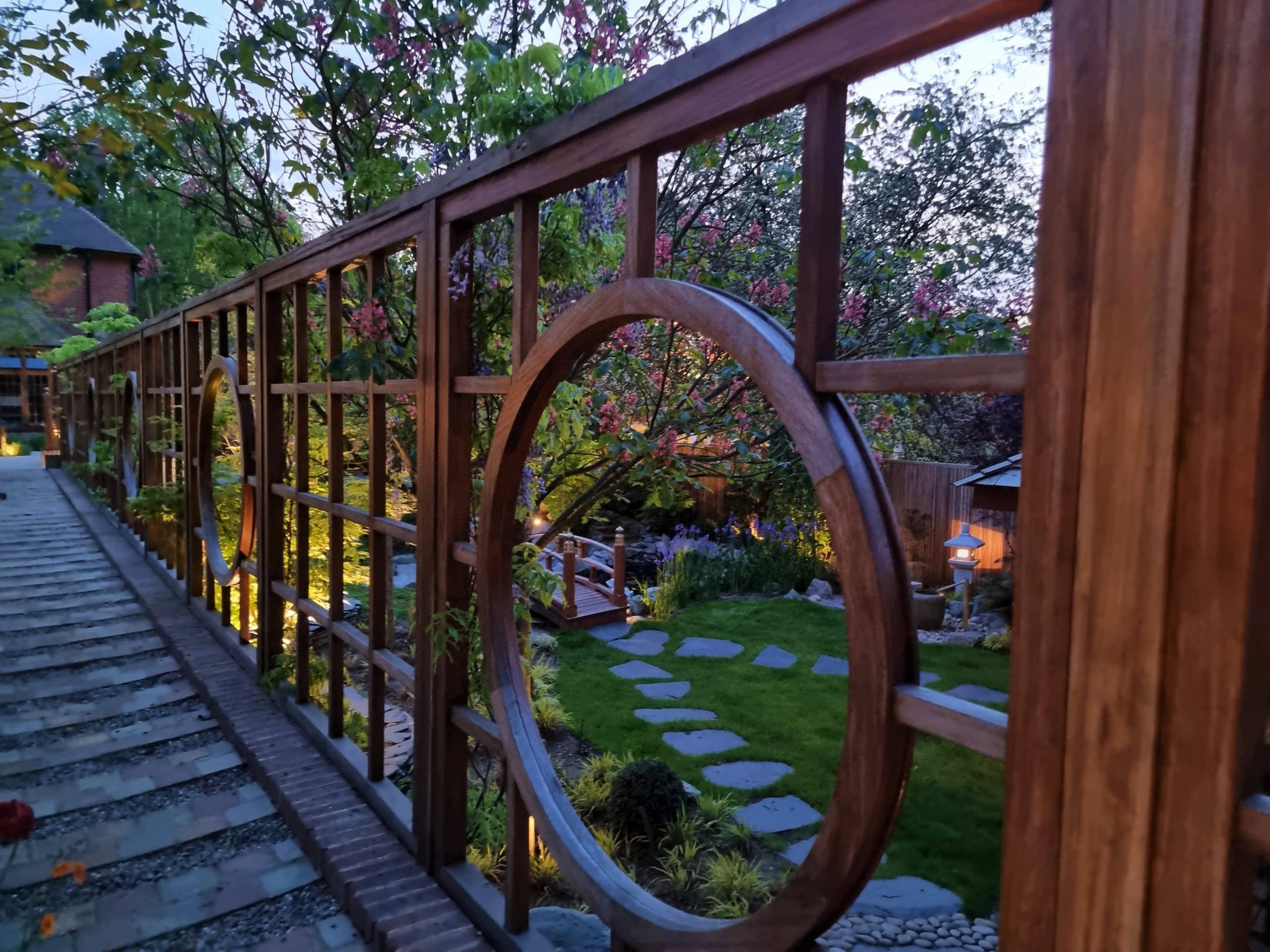
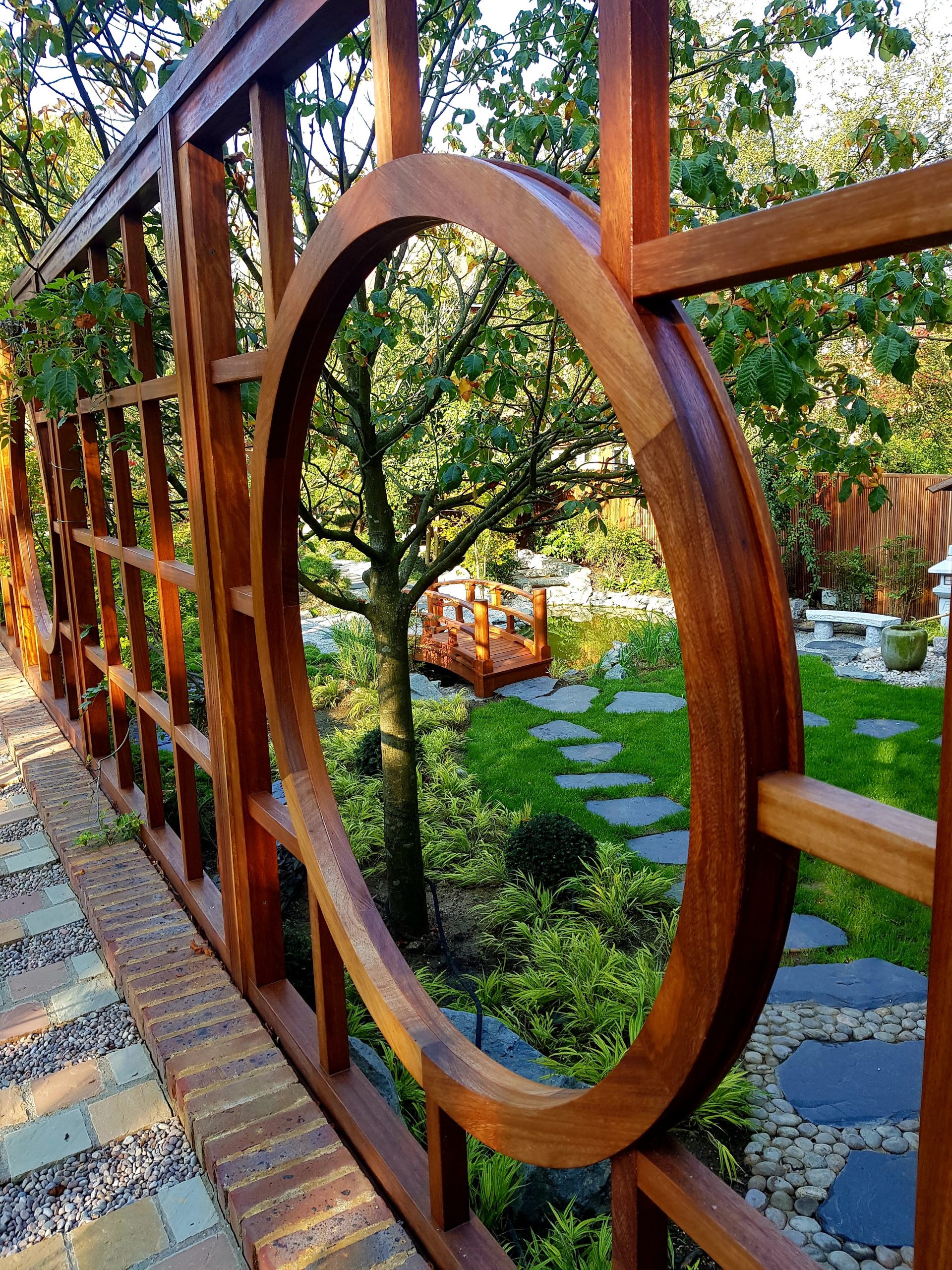
The modern Japanese garden is part of a large garden in North London which include the family garden published in this section called “where west meet east”. This garden was designed in a lower level and in a more secret space where can only be seen when the clients and friends approach the cherry tree walk on the higher level.
The ground was pretty much level with a double raised beds planted with shrubs and perennials that divided the lower and the higher level. Two large horse chestnut rosea were planted years ago and were so overscale and at the same time beautiful. Eventually they were diseased and had to be removed and replaced for two new ones.
The Design Process
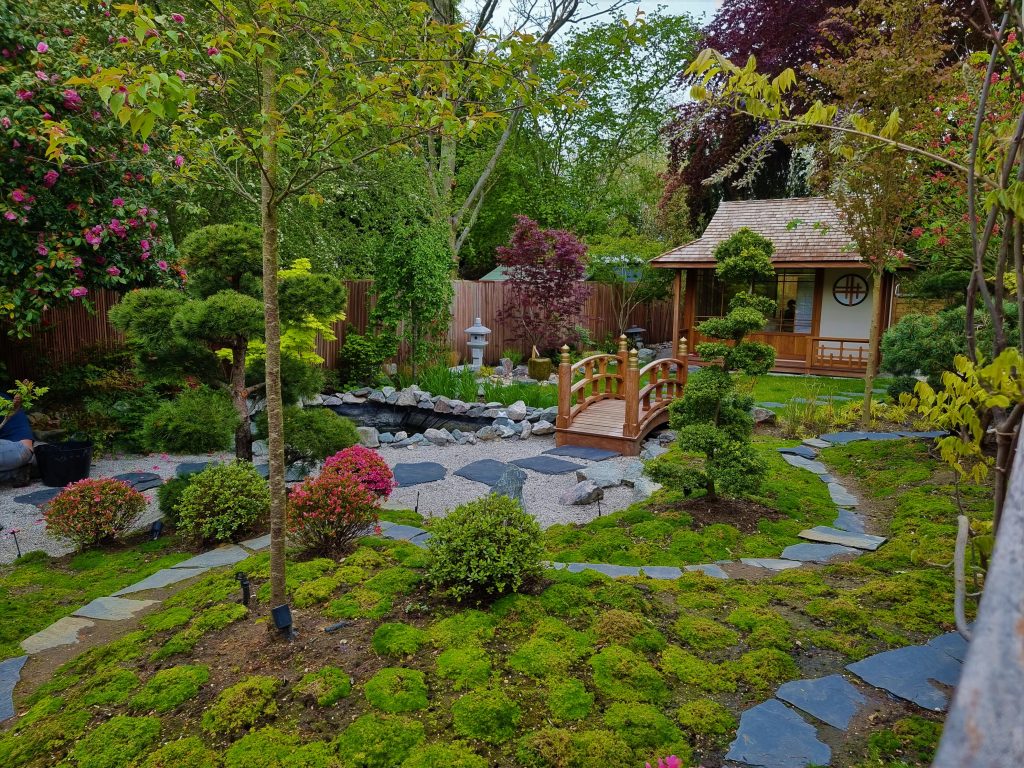
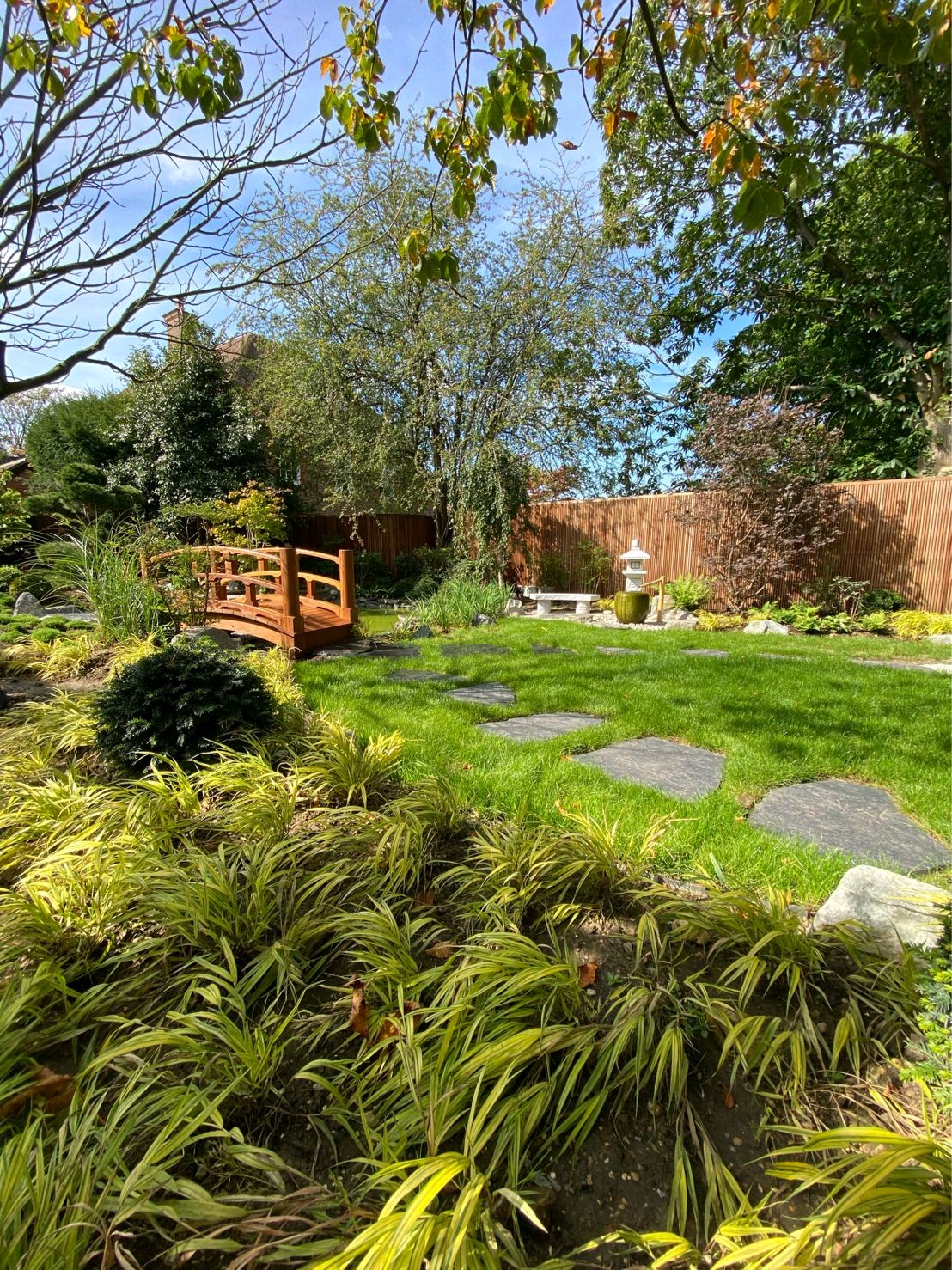
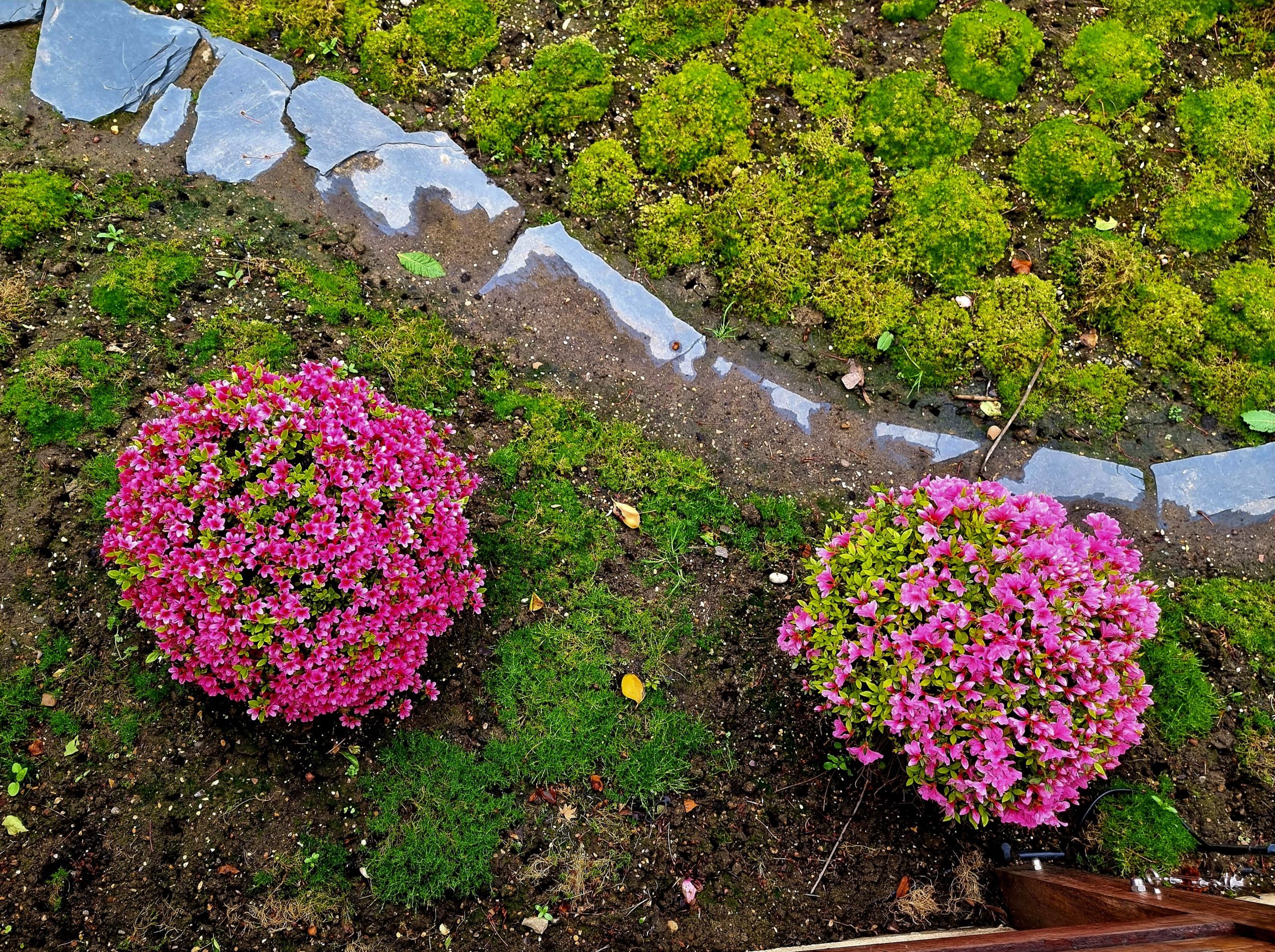
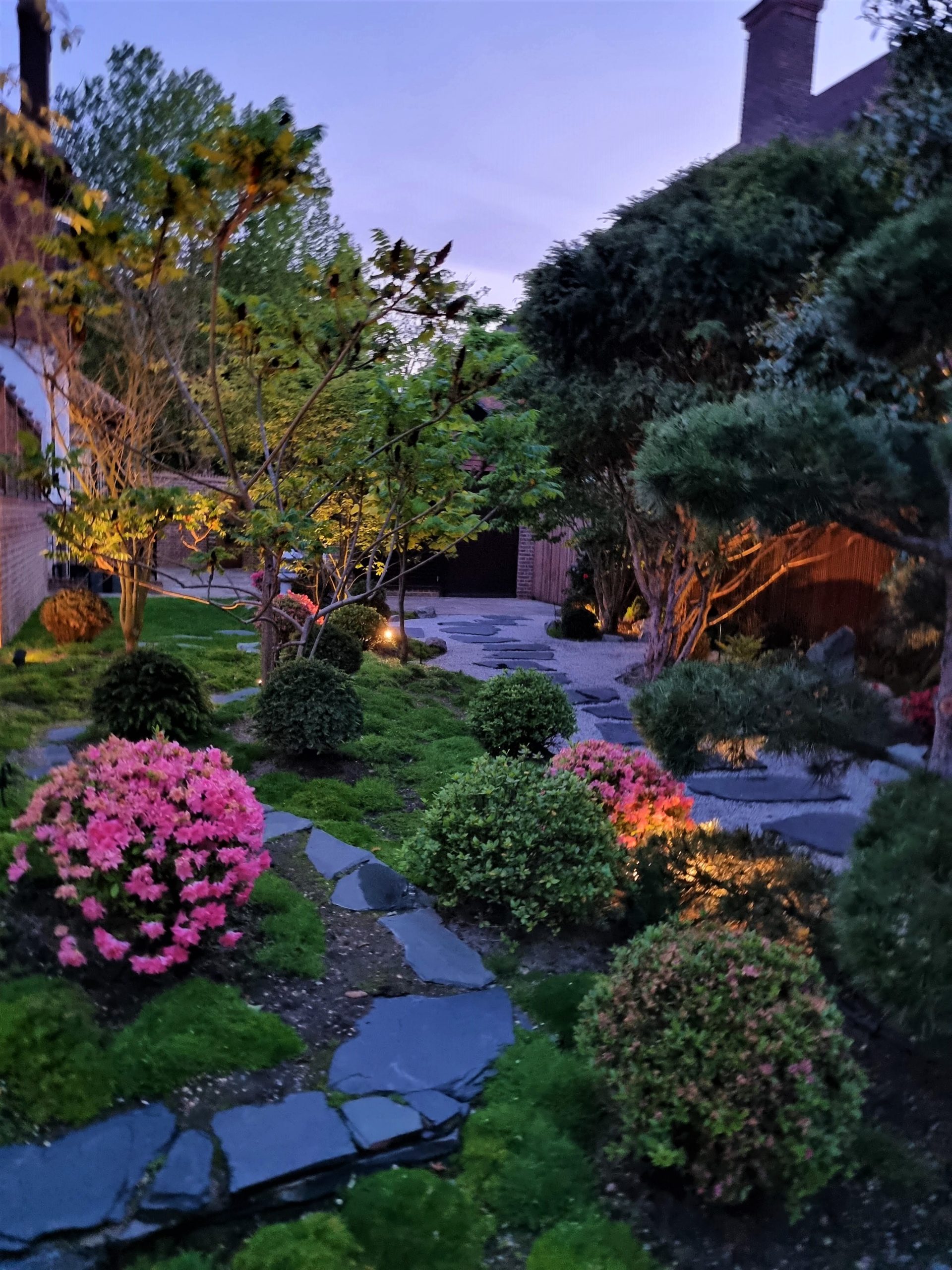
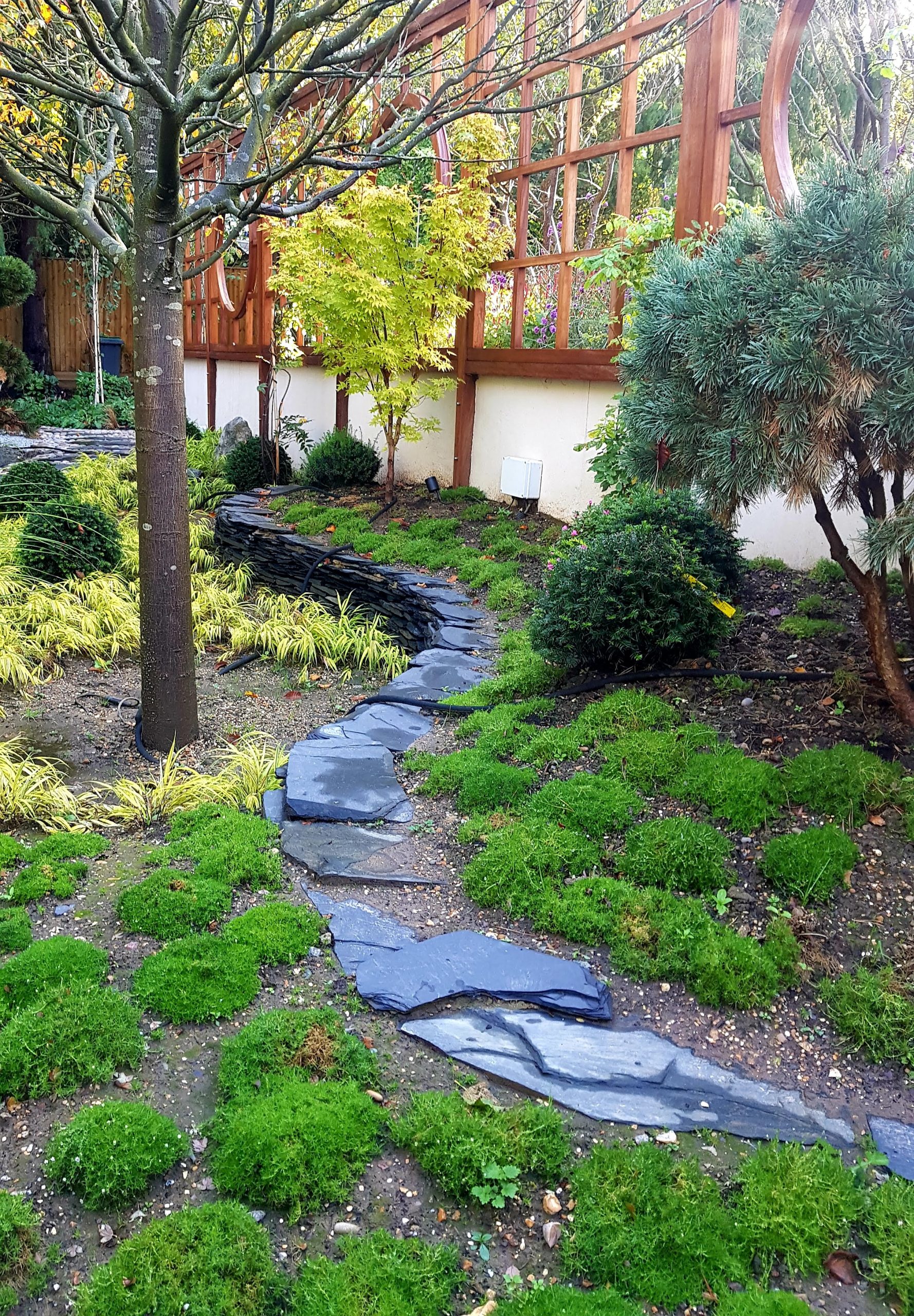
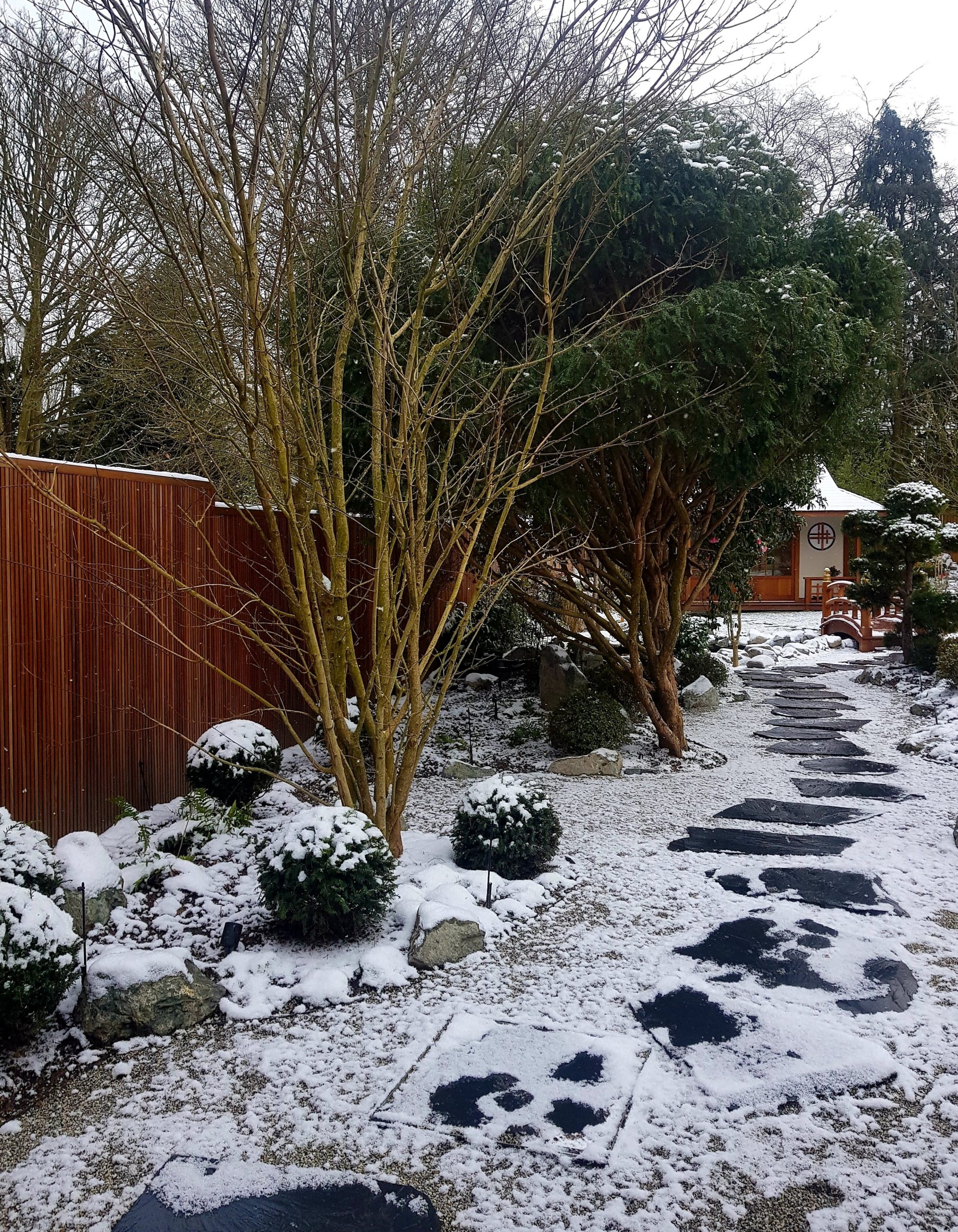
The design gradually developed from an organic and asymmetrical layout inspired by Japanese tea gardens. To begin with moss mounds would be planted on one side. Meanwhile, on the opposite side there would be trees and other ground covers.
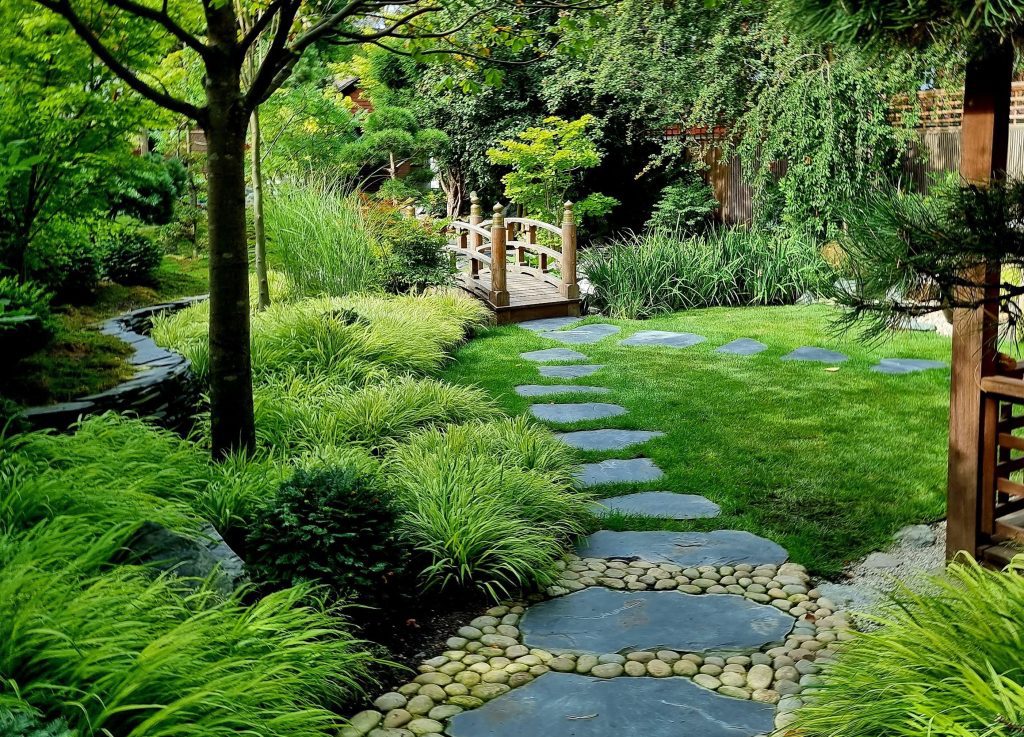
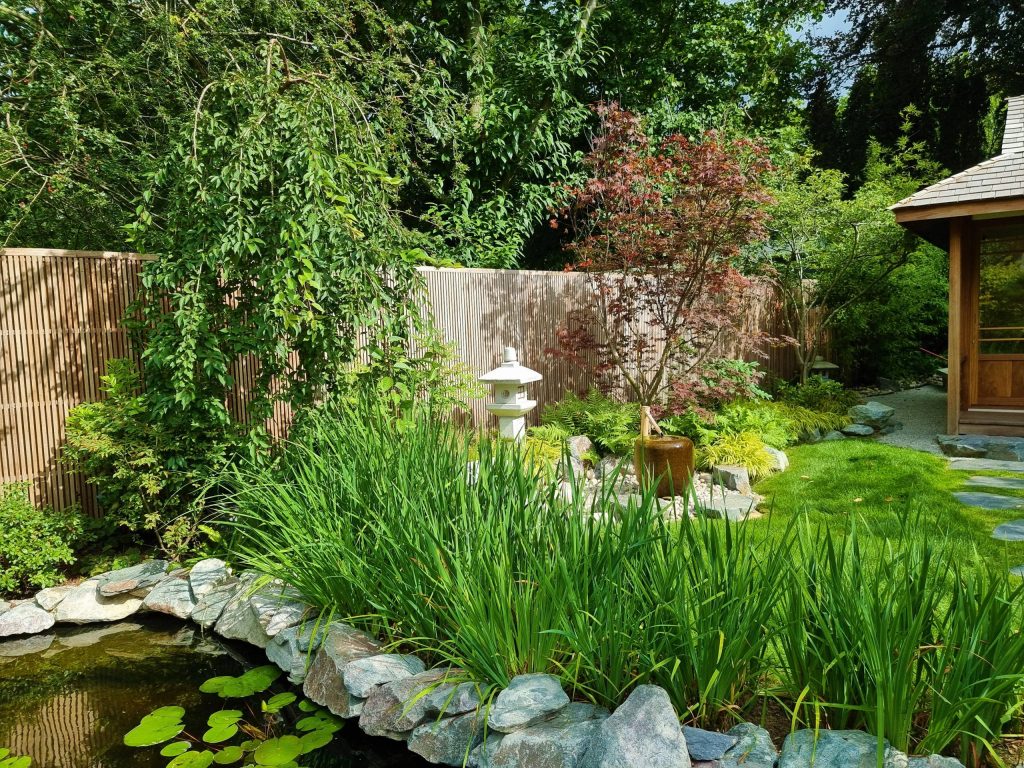
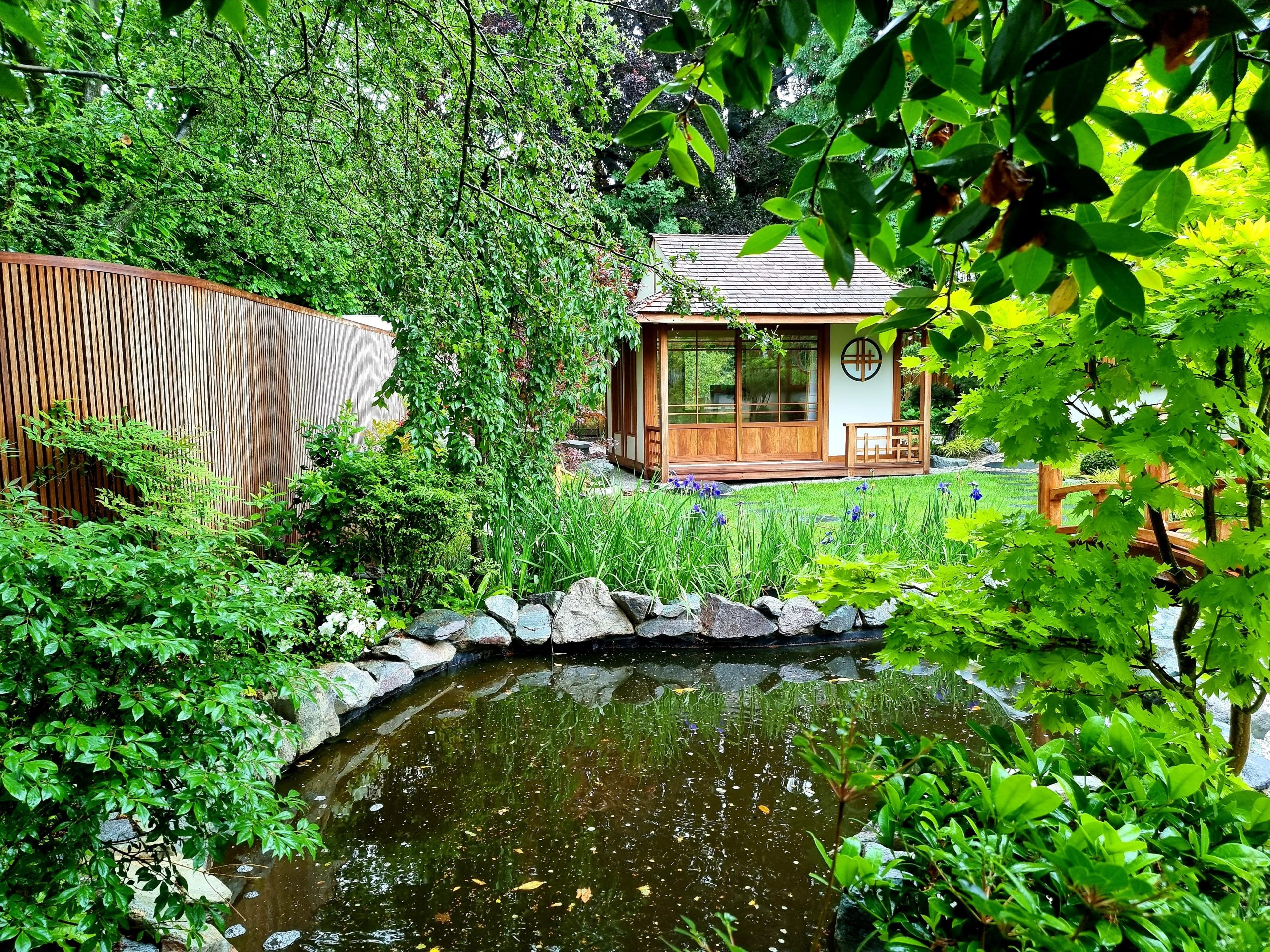
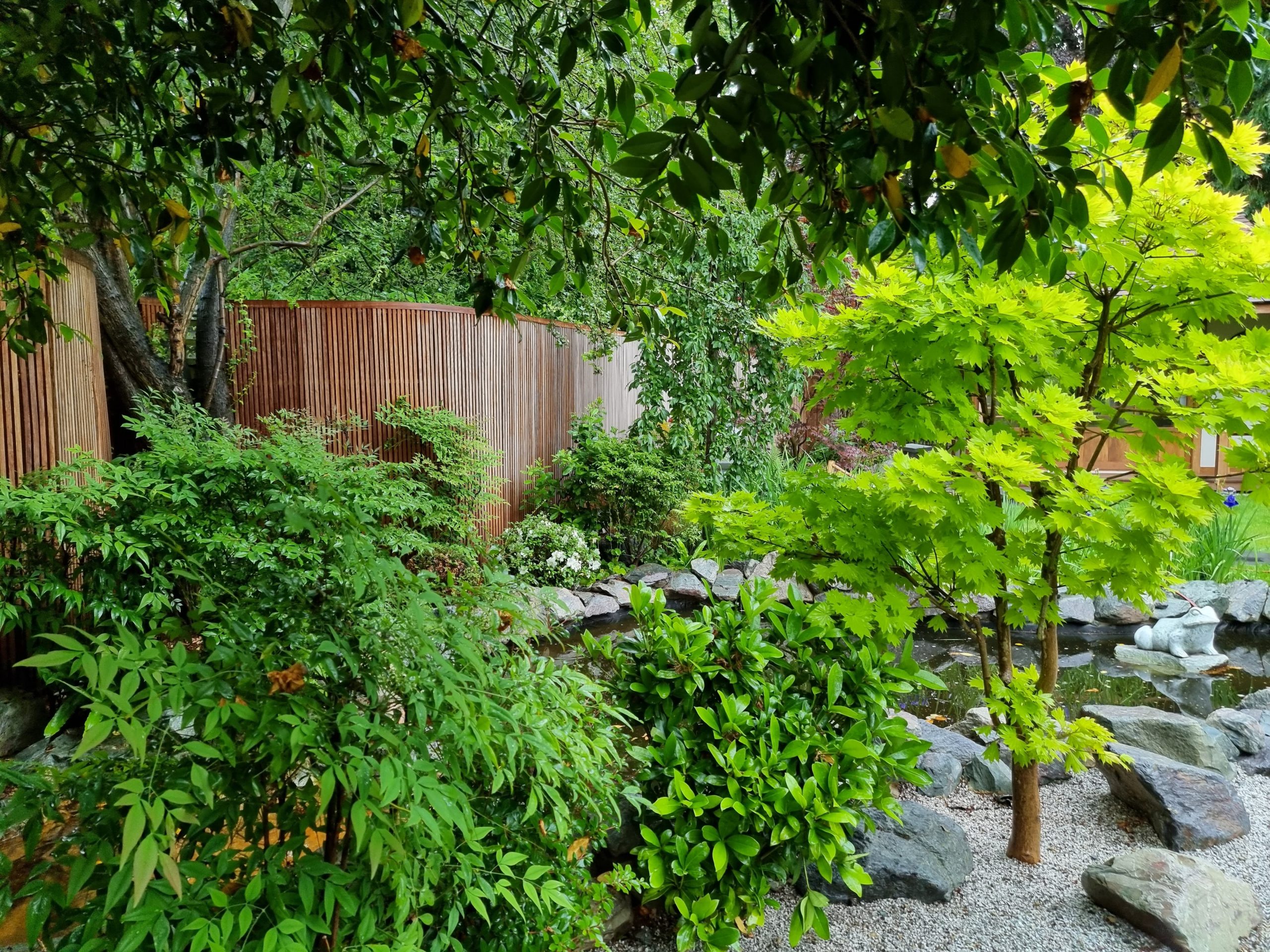
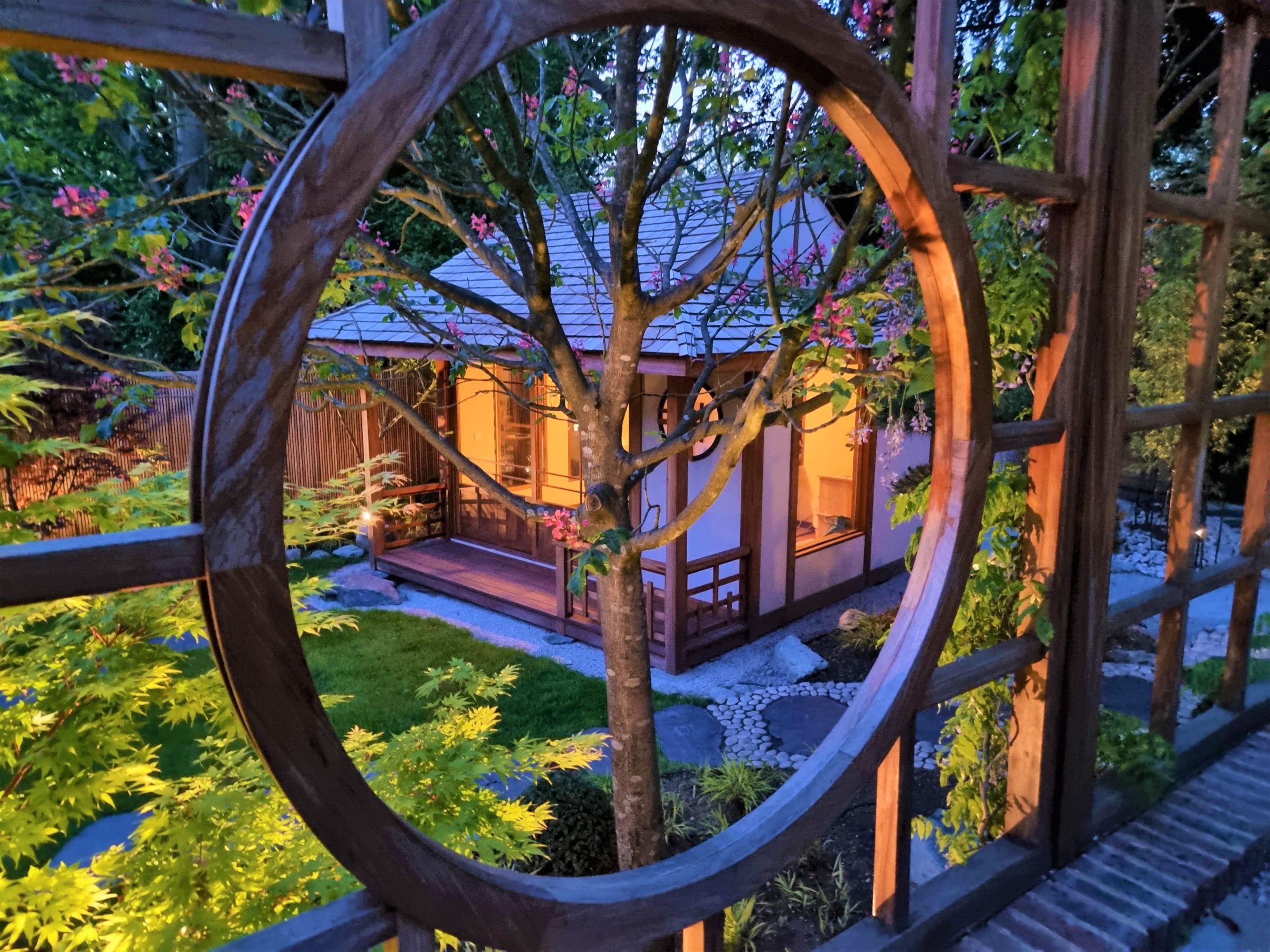
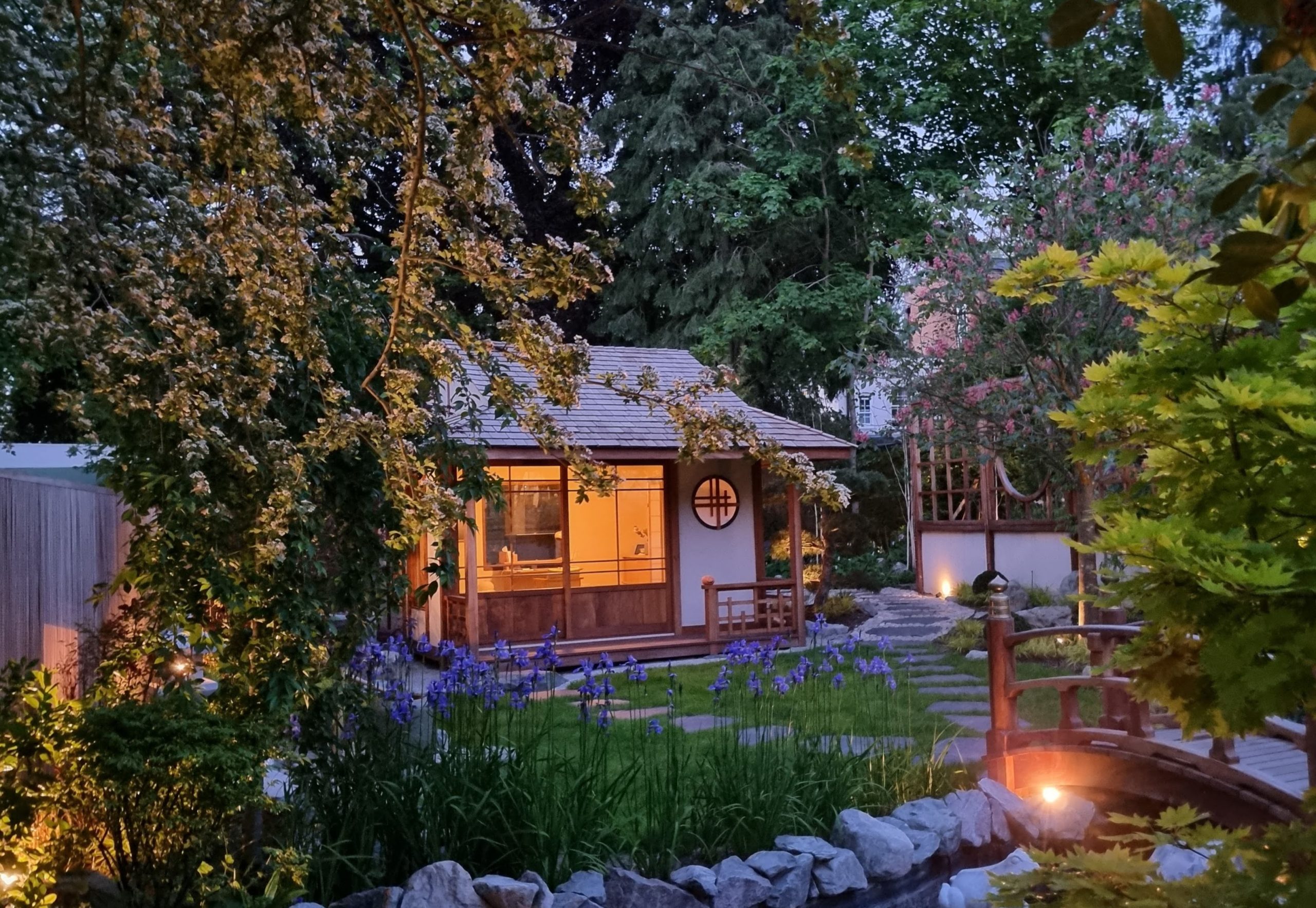
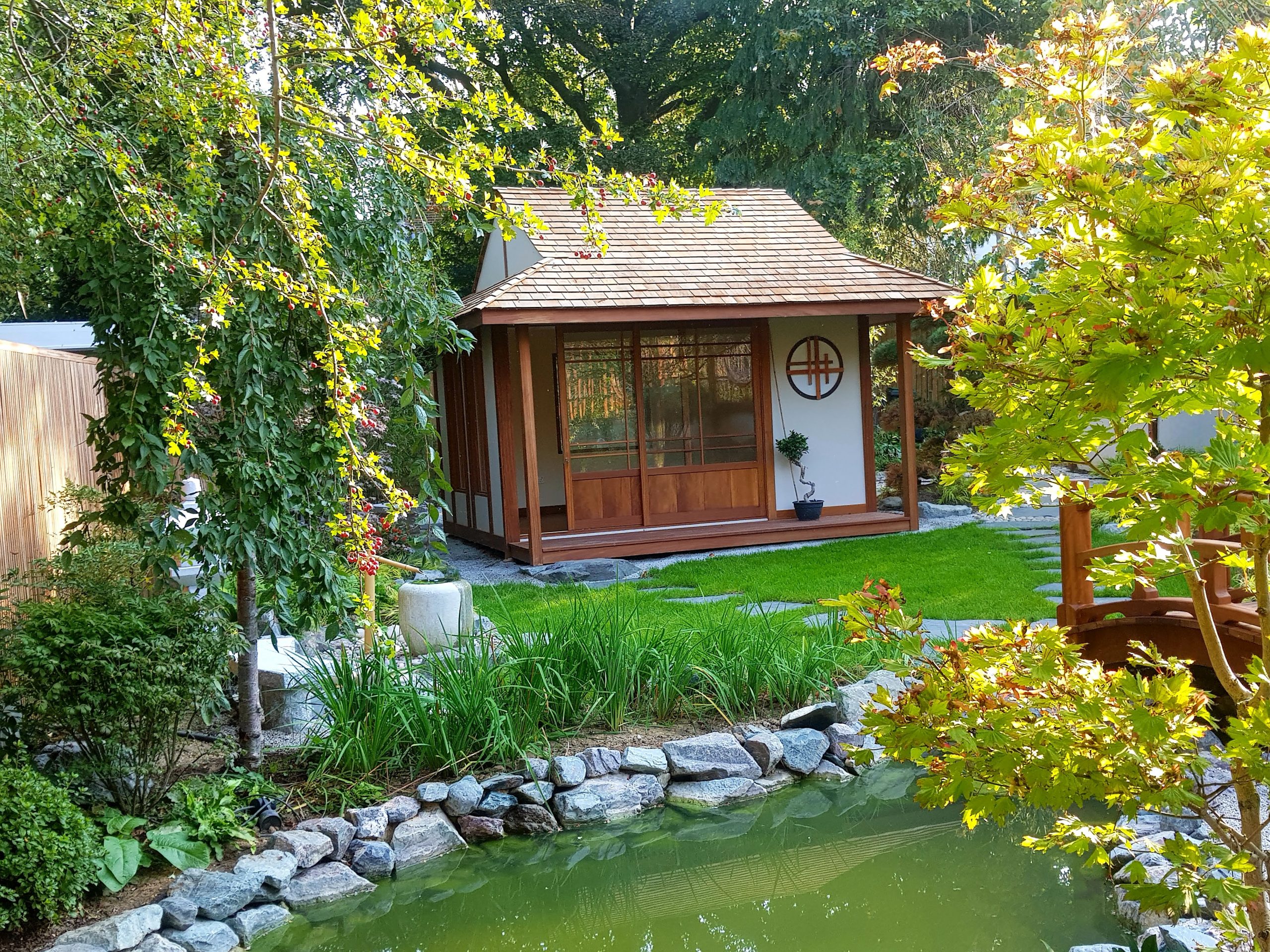
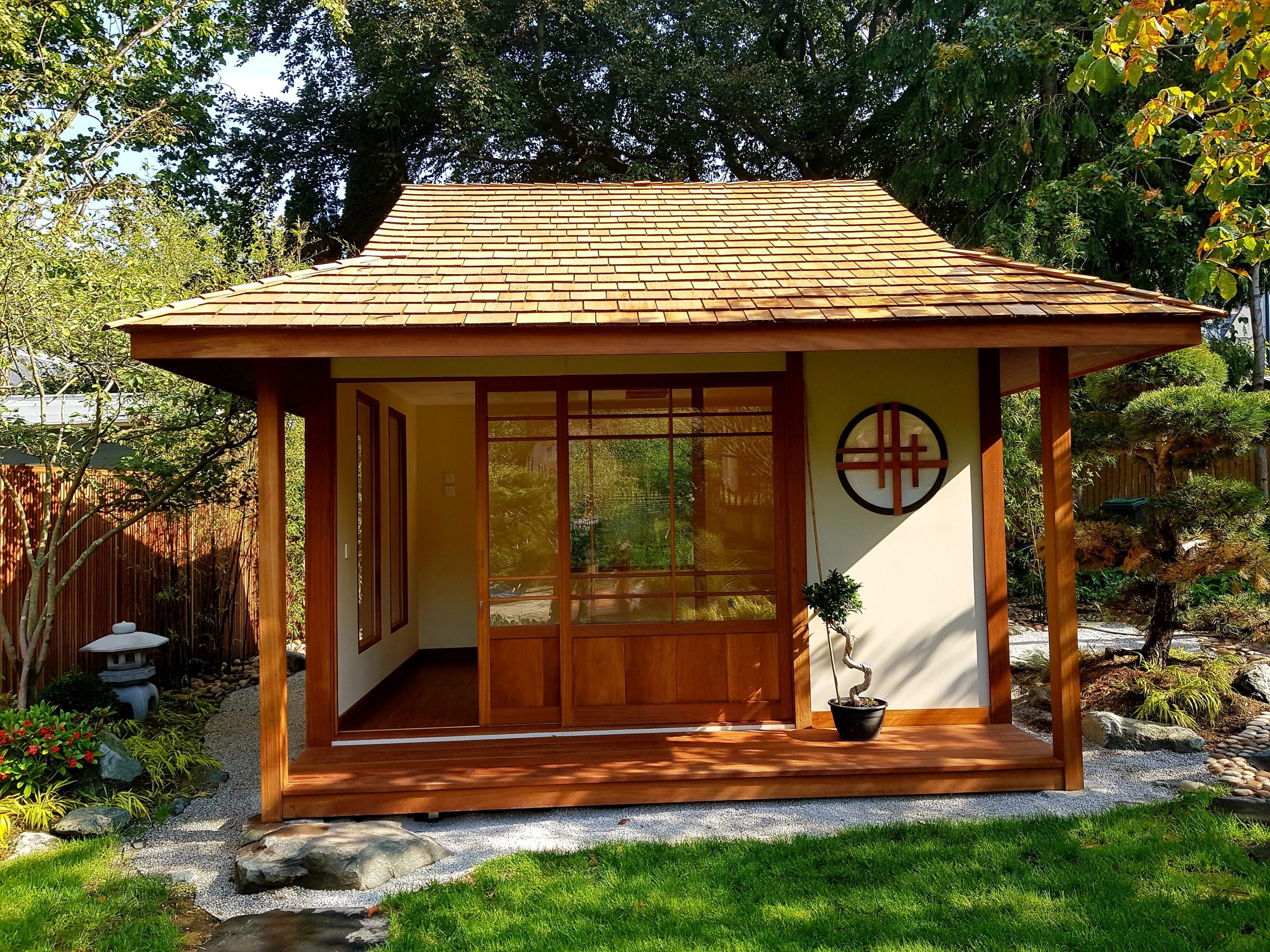
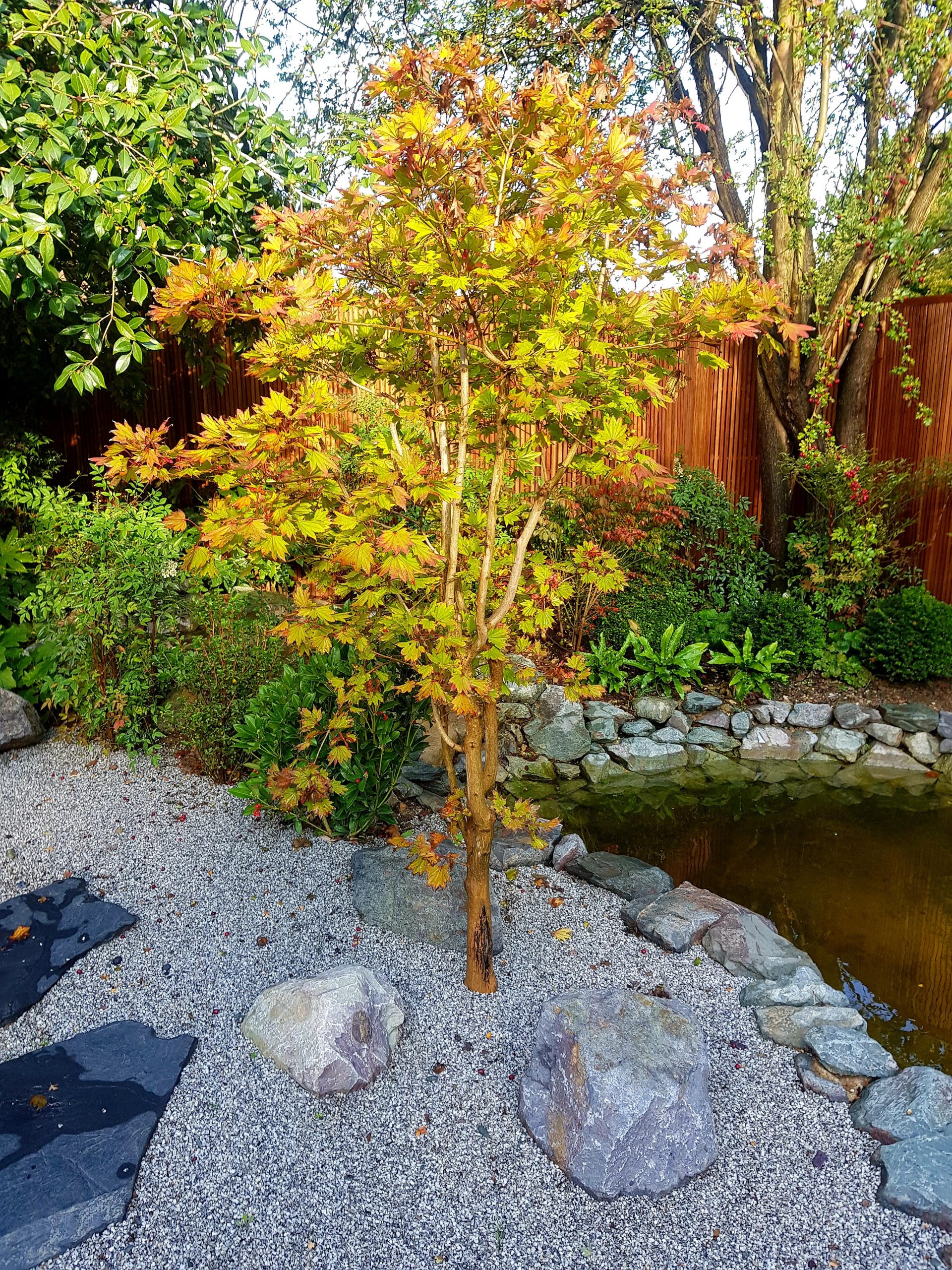
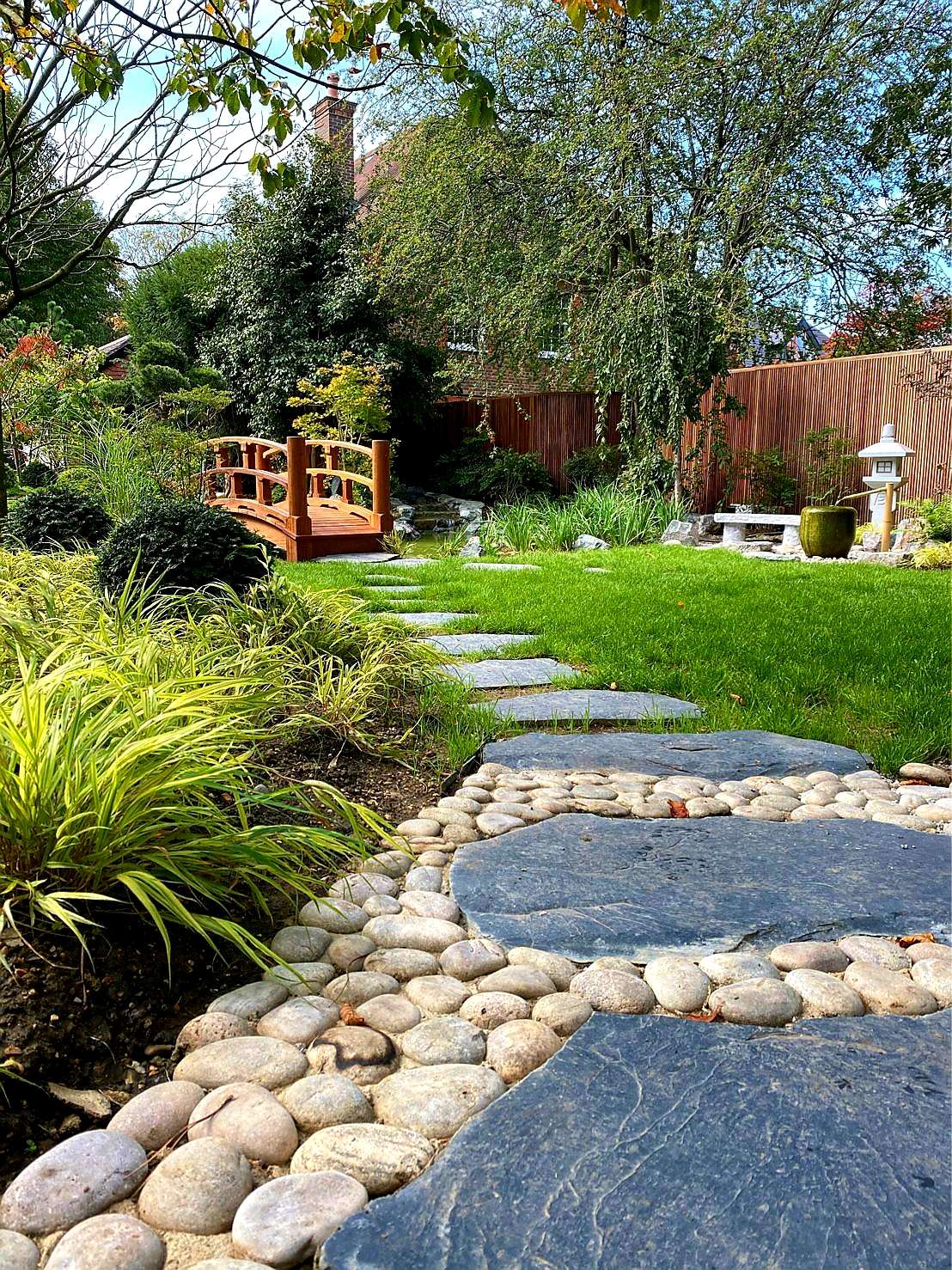
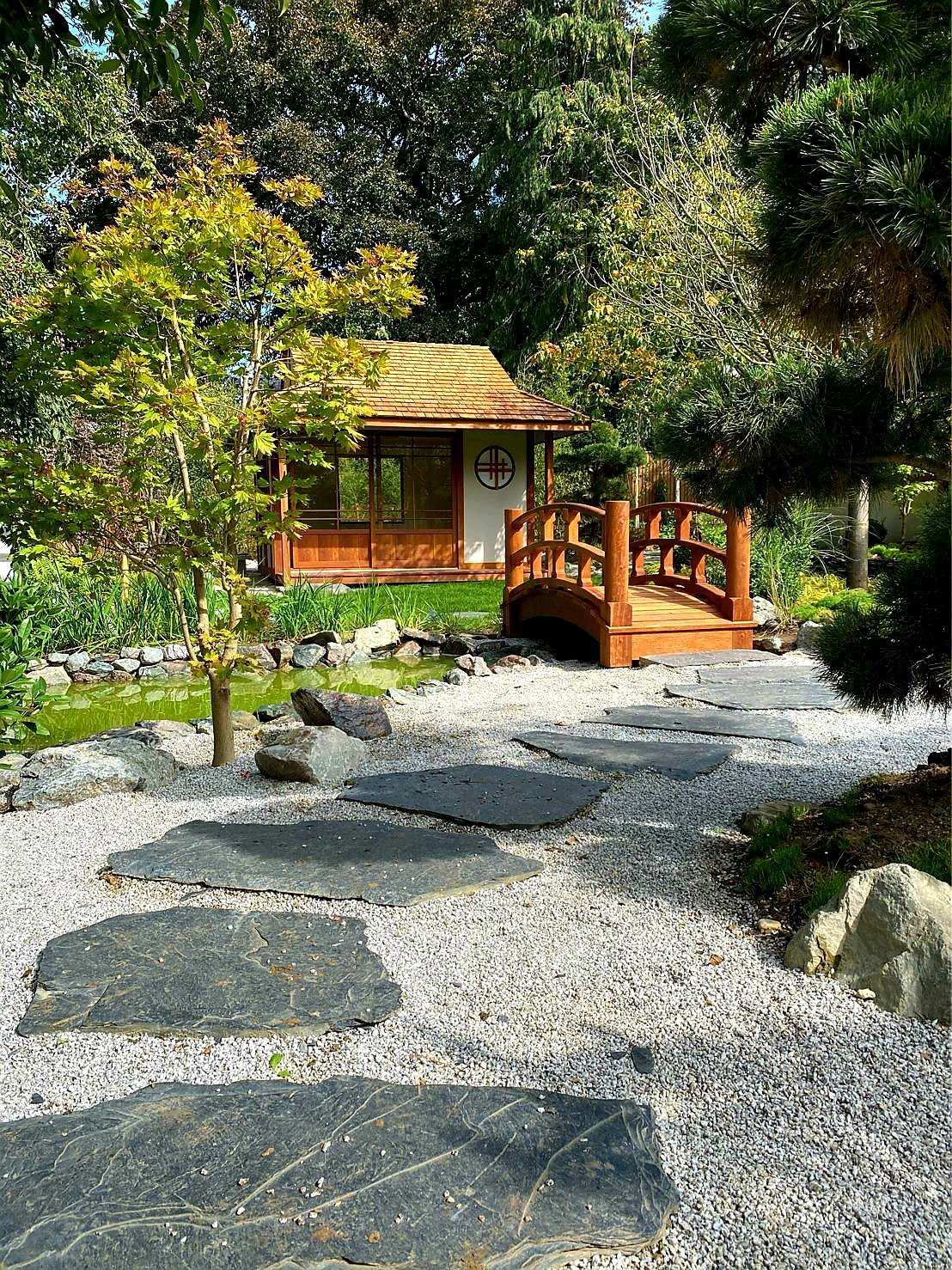
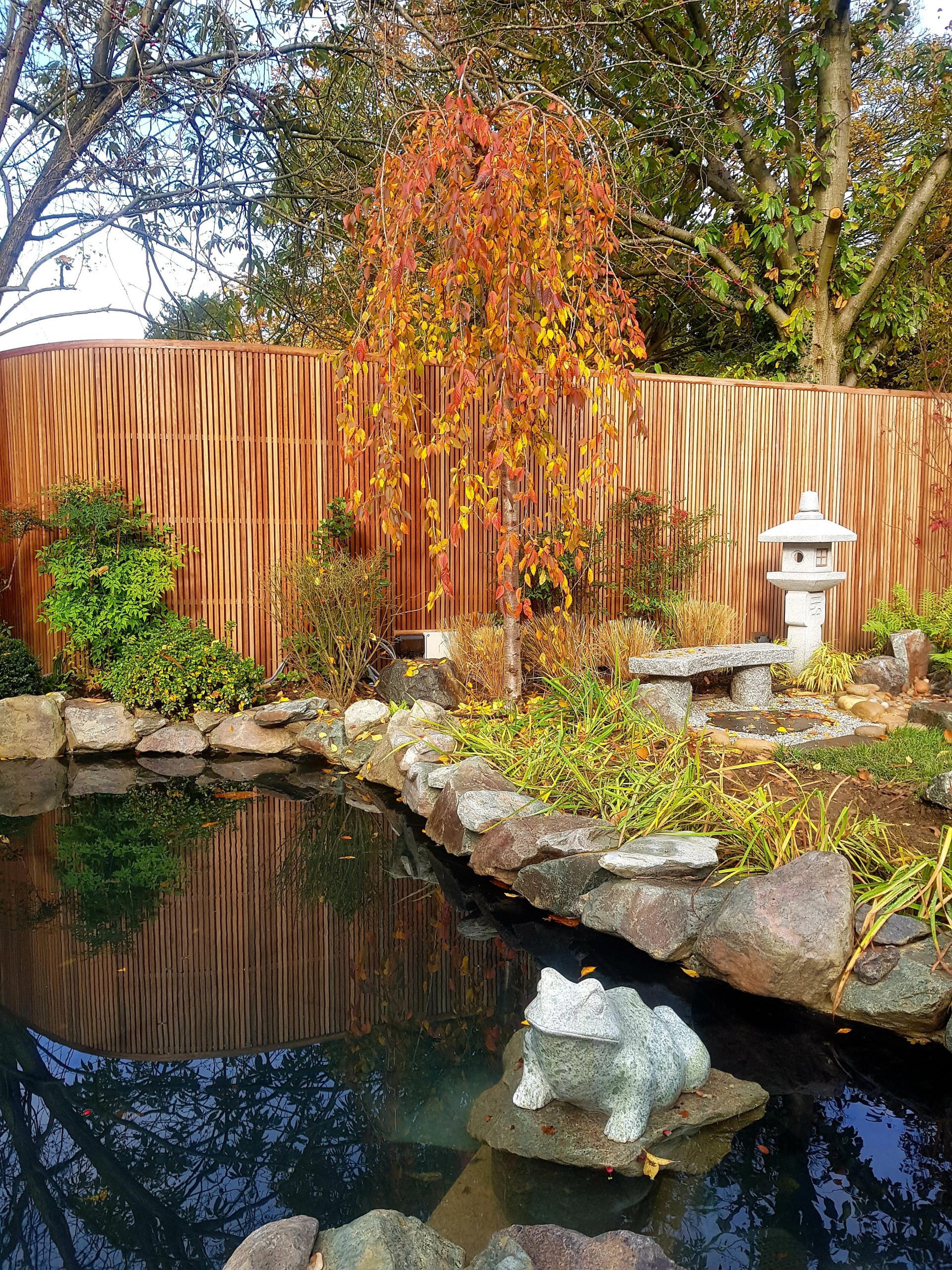
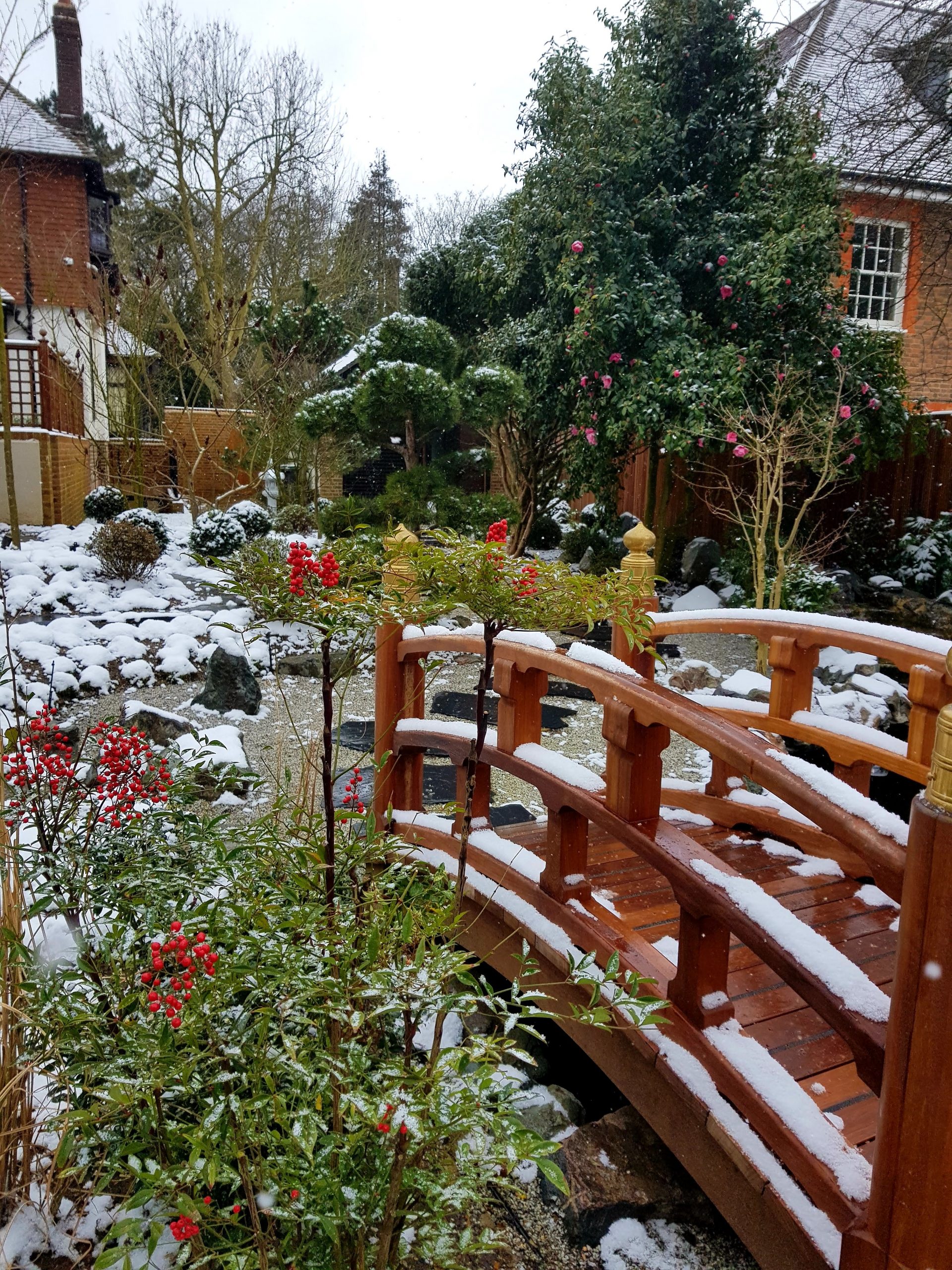
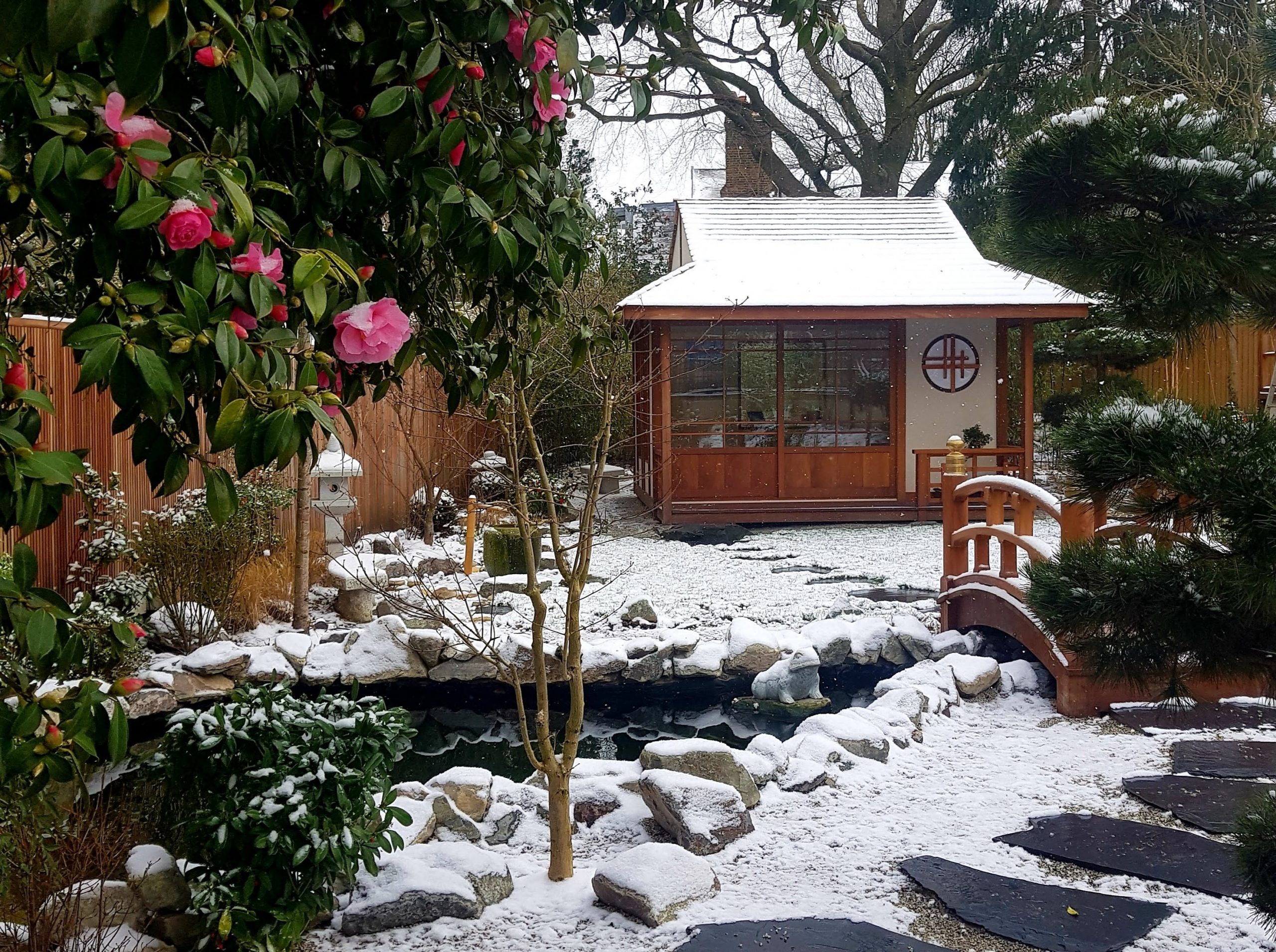
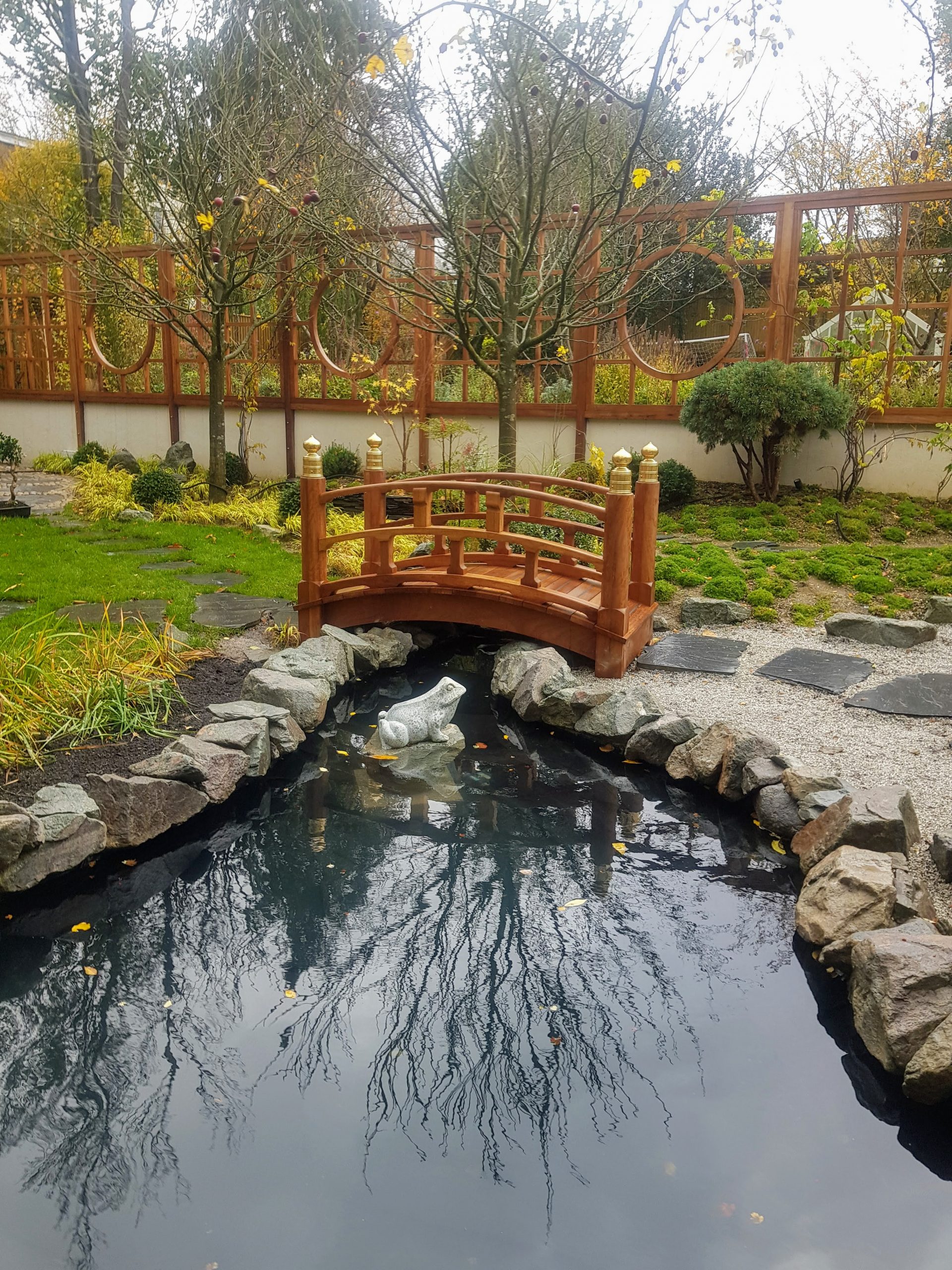
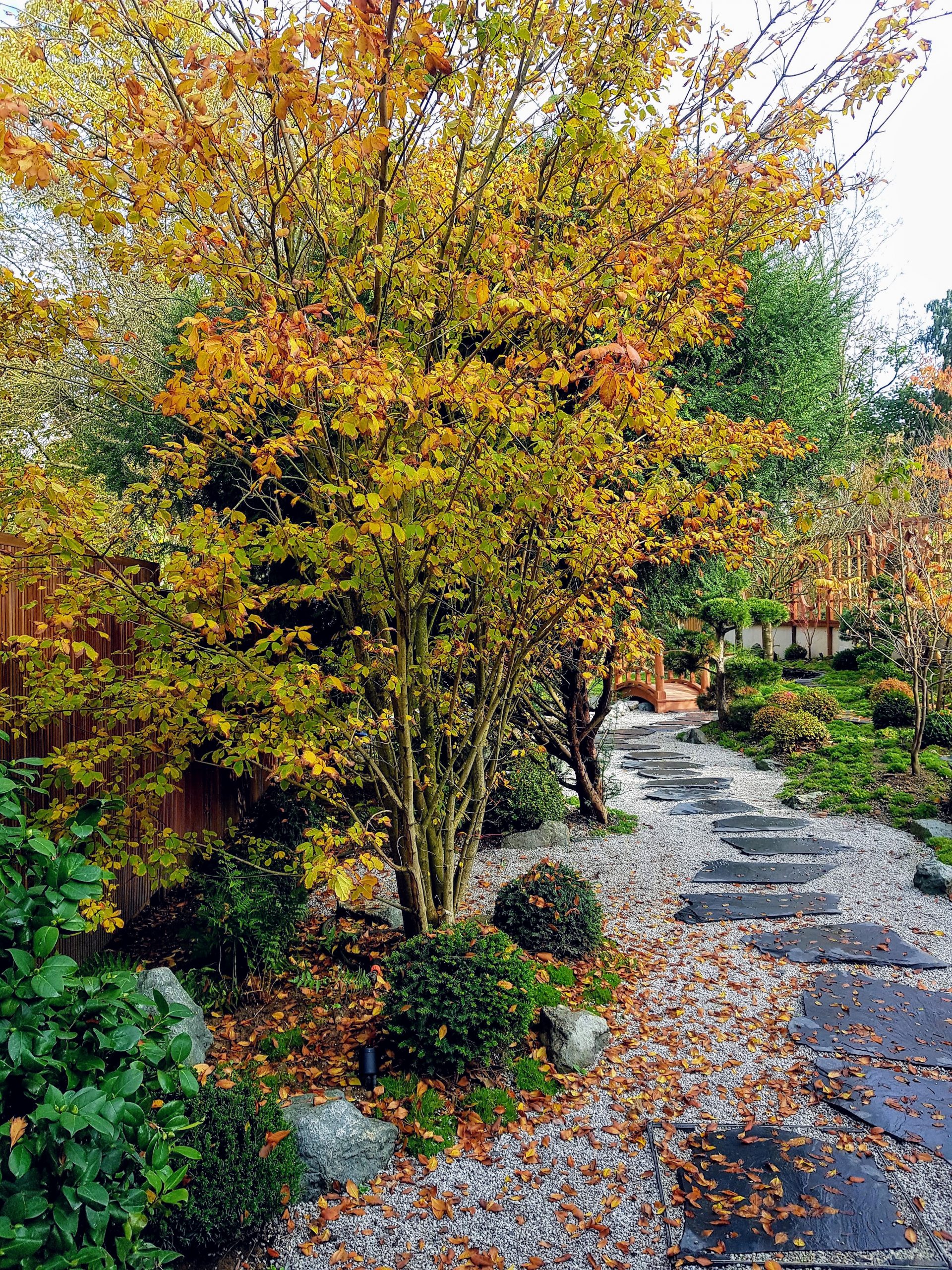
To separate the areas, a small pond with a beautiful Japanese bridge was introduced. Beyond the bridge, a Japanese tea house was installed. Most importantly, it remained hidden from the first area, enhancing mystery and discovery. In this area only grasses and clouded shape trees, such as Acers would be planted to create a contrast.
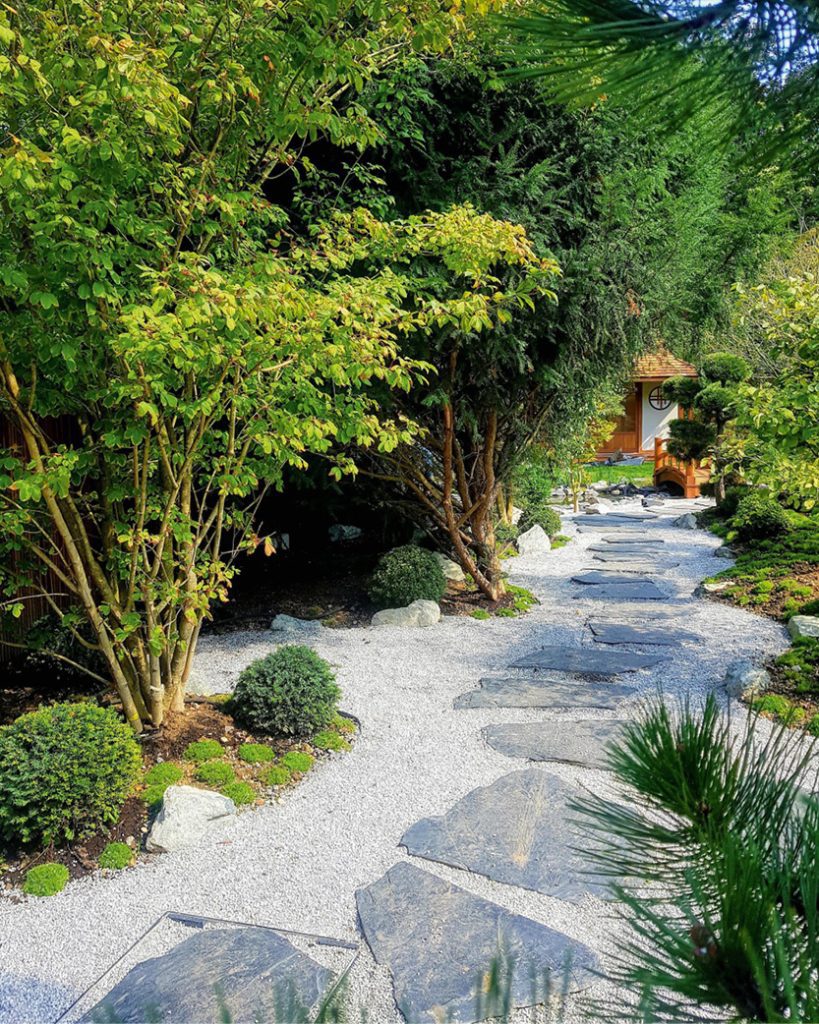
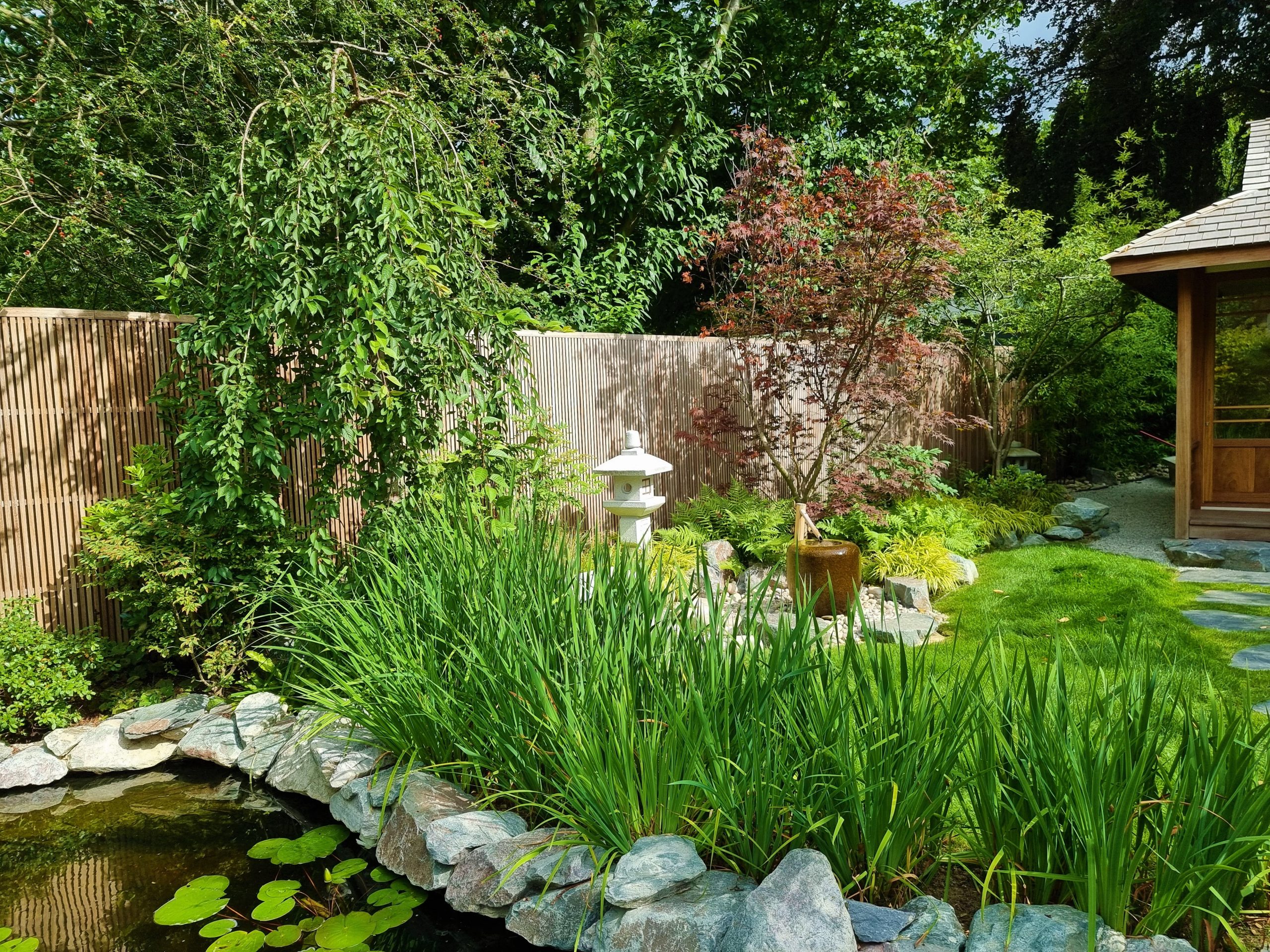
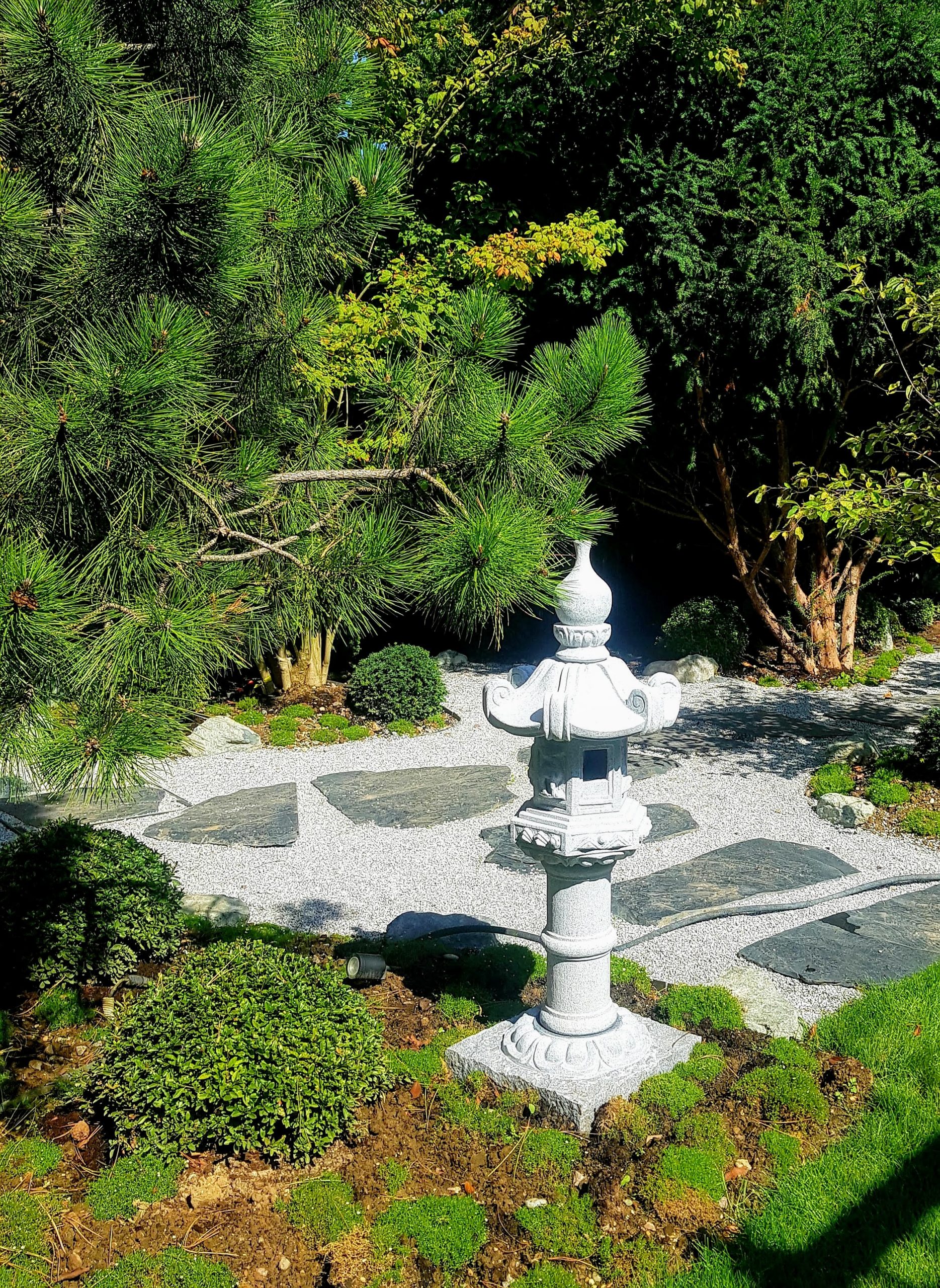
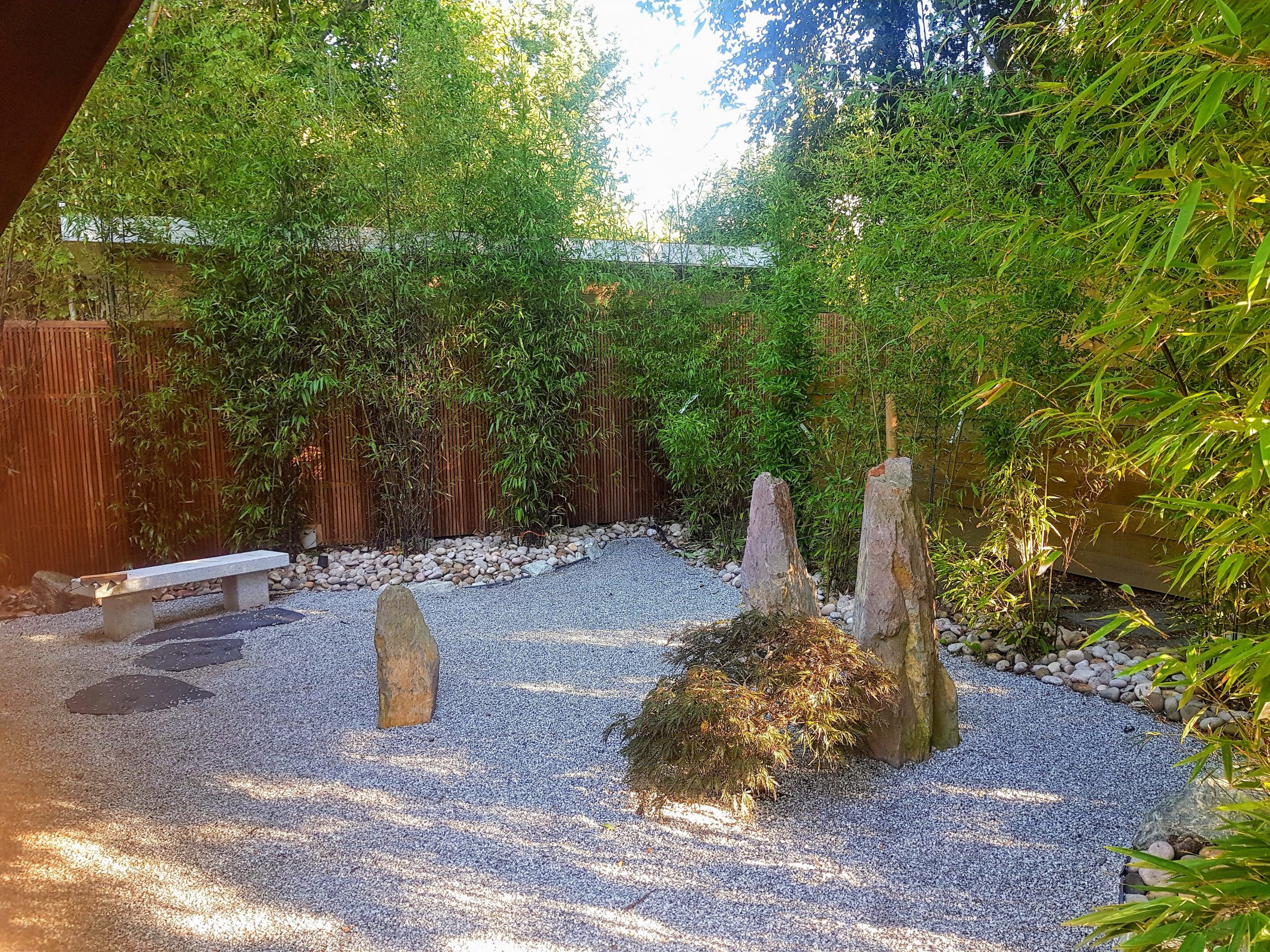
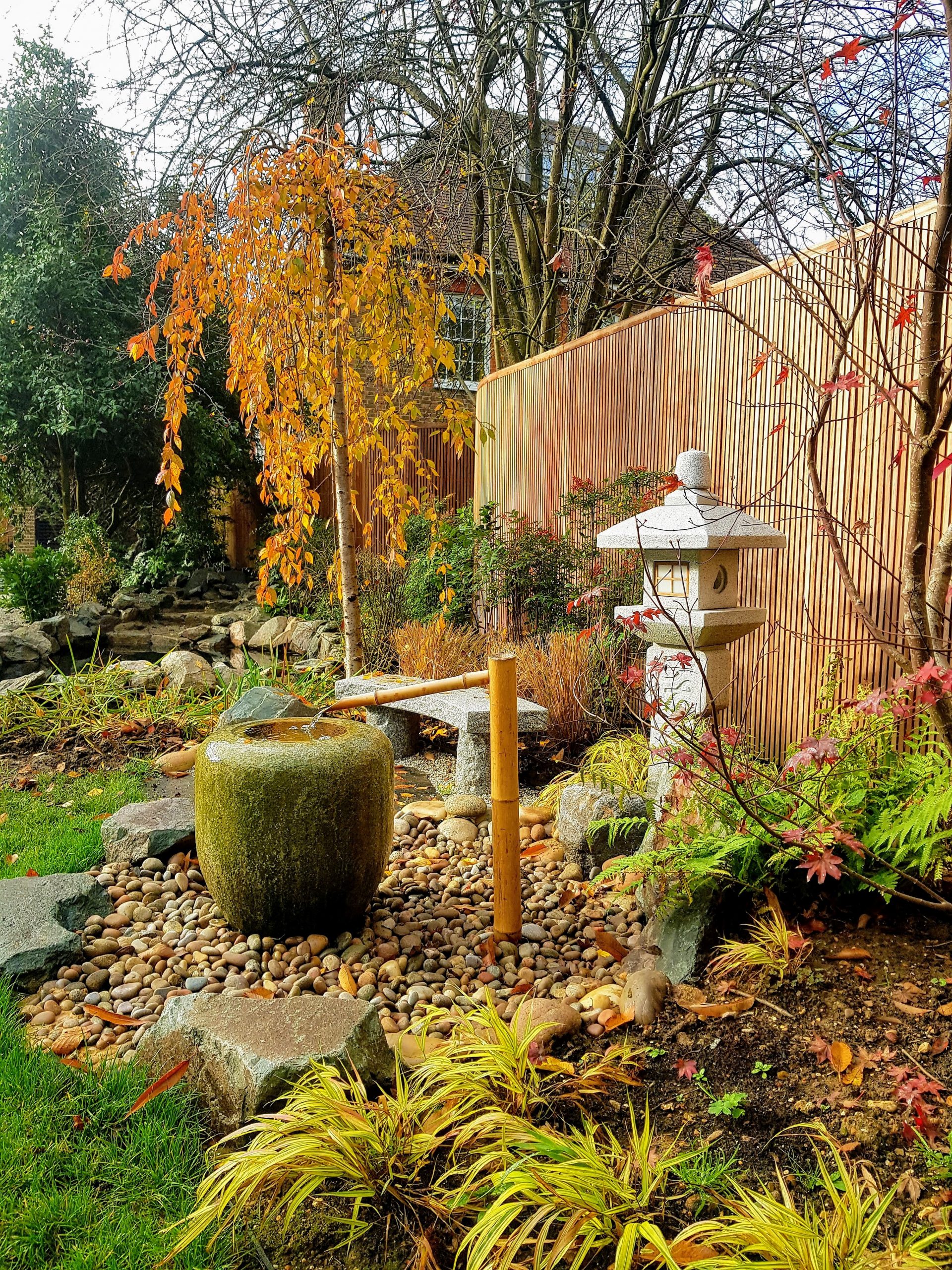
At the back, a zen Japanese garden was designed with bamboos, gravel, and stone. This would create a good finish for the Japanese garden at the same time separating from the compost bin area.
Finally, the Japanese garden leads to the woodland garden and is very much part of it as can be seen from the tea house as a picture.
The Planting
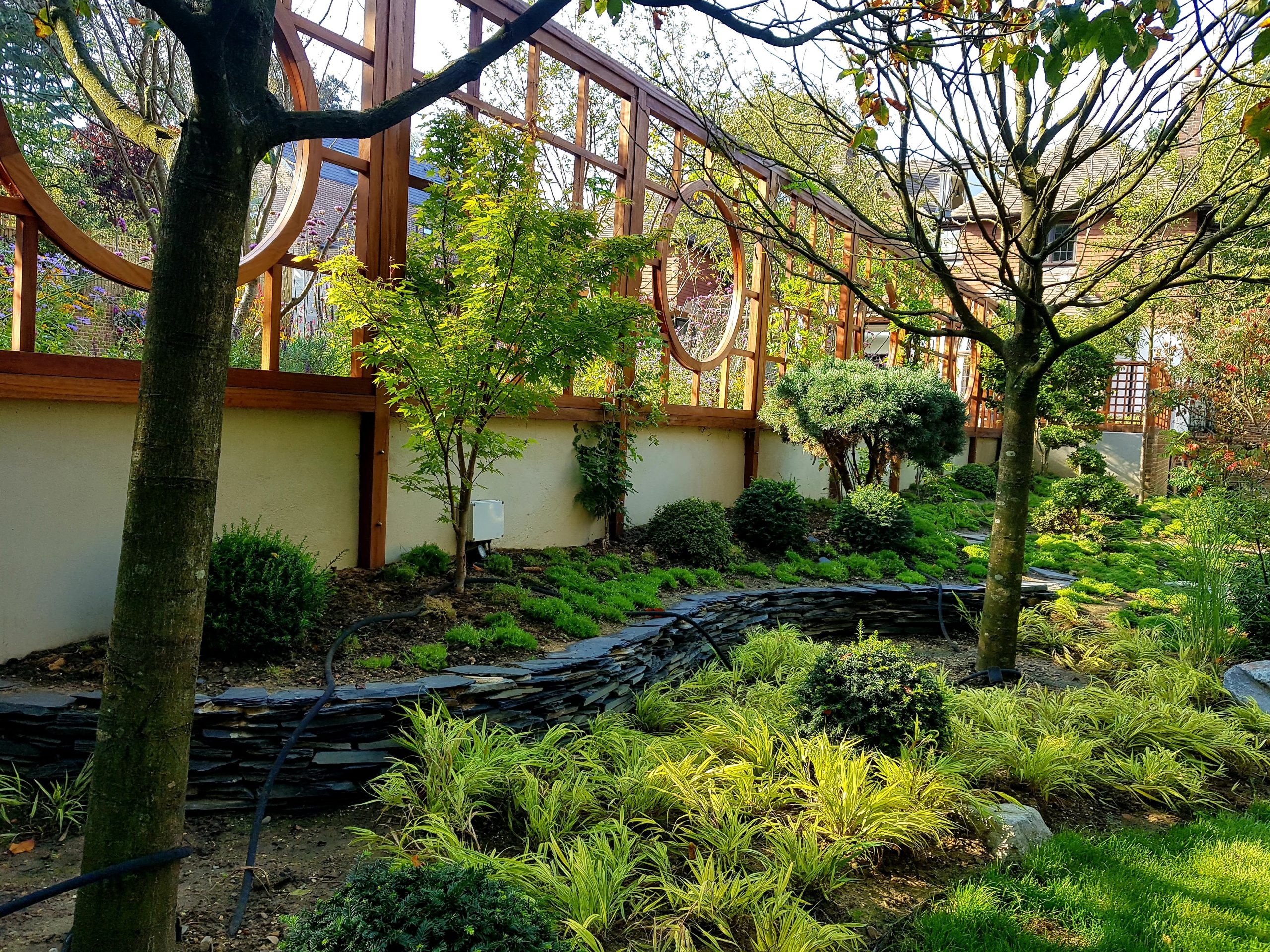
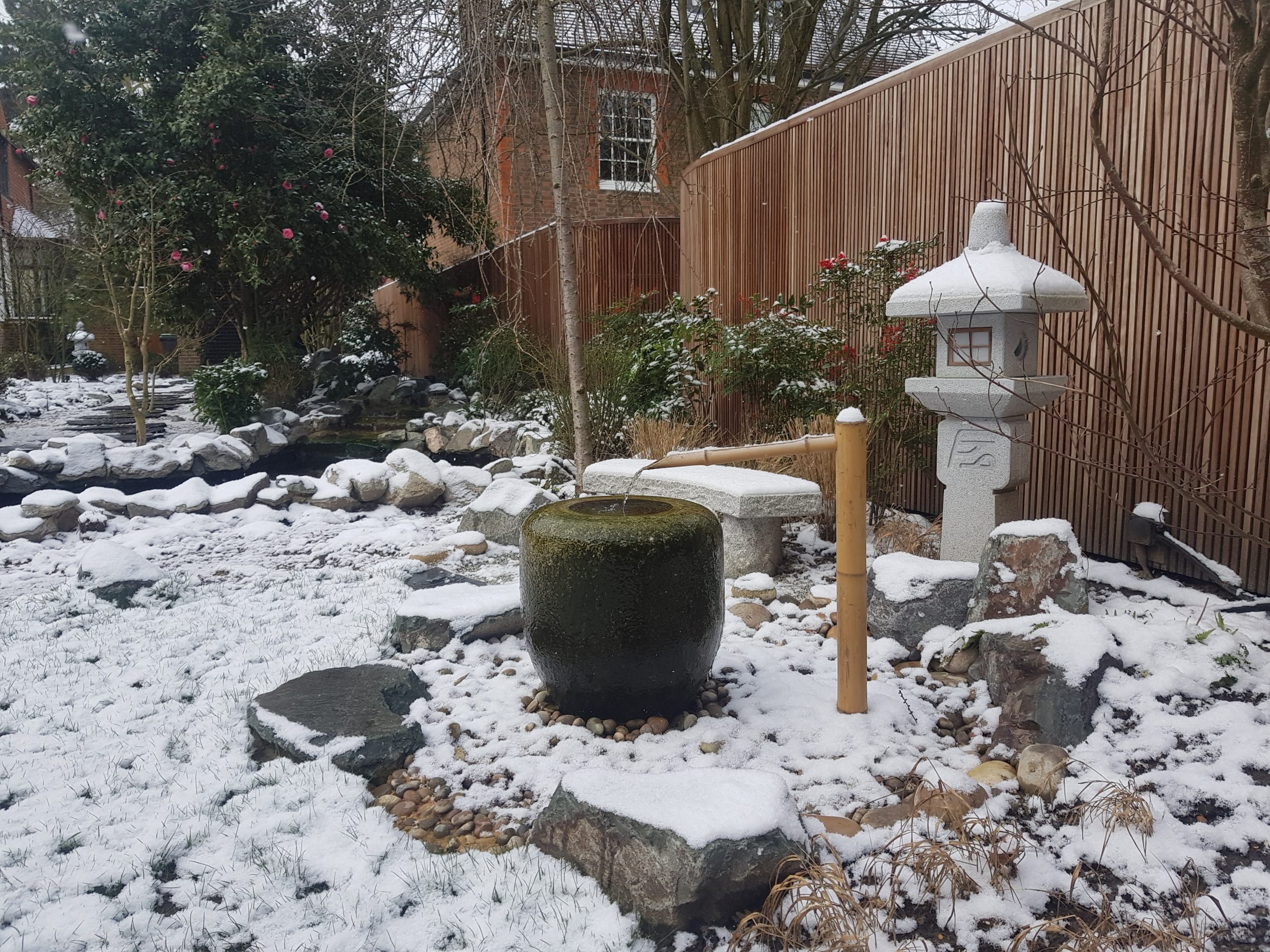
The choice of plants was from a Japanese garden palette. For example, Wisterias were planted to be trained in the decorative screen that separates the family garden from the Japanese garden. Additionally, Acers, Cherry trees, clouded shaped pines, Camelias and Yew providing the structure for the garden.
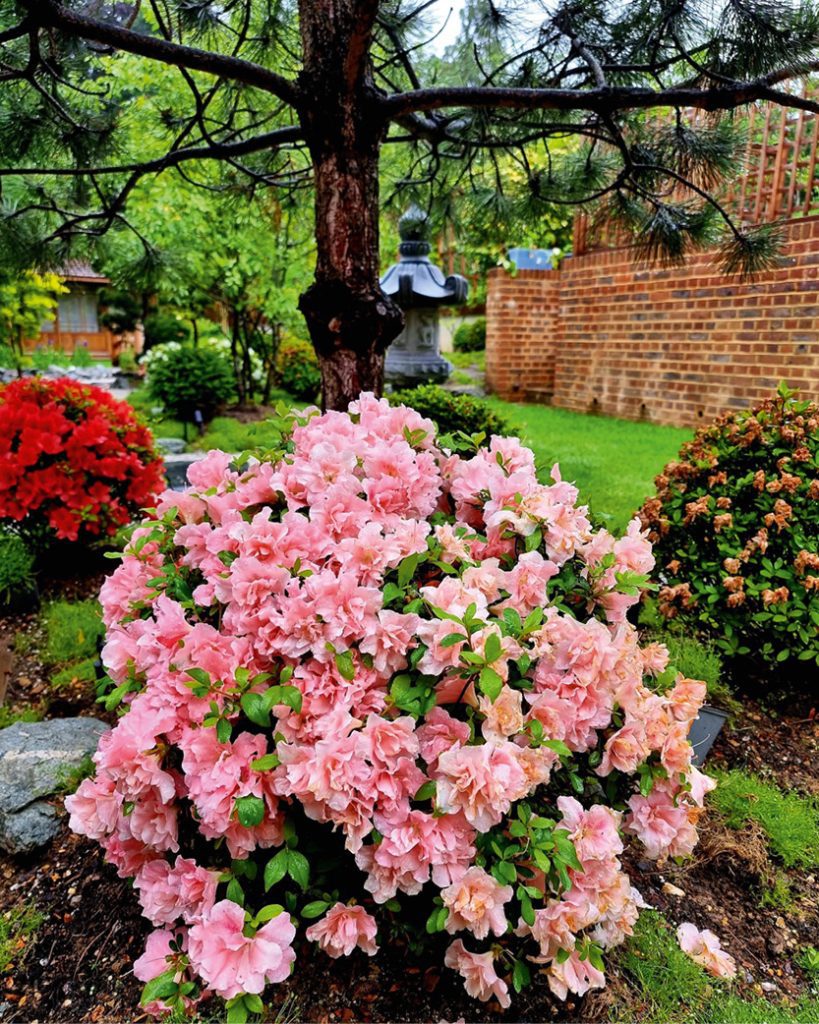
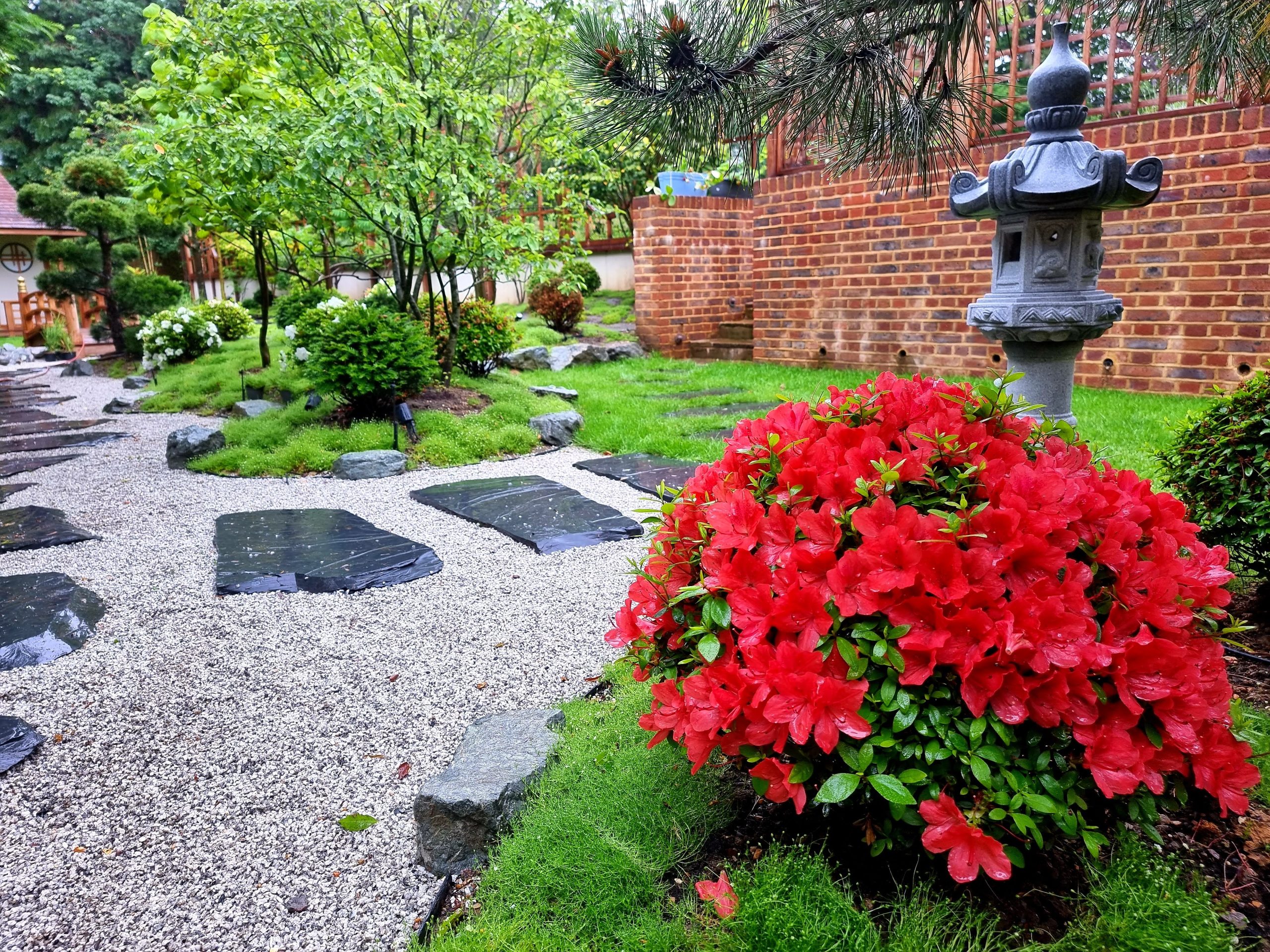
Meanwhile, the shrubs were fatsia japonica around the pond, hydrangeas, azaleas, rhus typhinia. Several azaleas and yew balls were placed randomly around the garden creating rhythm and interest.
Around the pond Zantedeschia’s, Miscanthus, Sarcococas, Nandina Domestica create a great transition to the second area. This area was planted with Hakoneckloas in most of the ground level.
As a result, this garden allows the client to retreat and walk mindfully through the slate stepping stones towards the Japanese tea garden. Here, they would practice meditation, yoga and forget about the business of the London life.